More About This Card
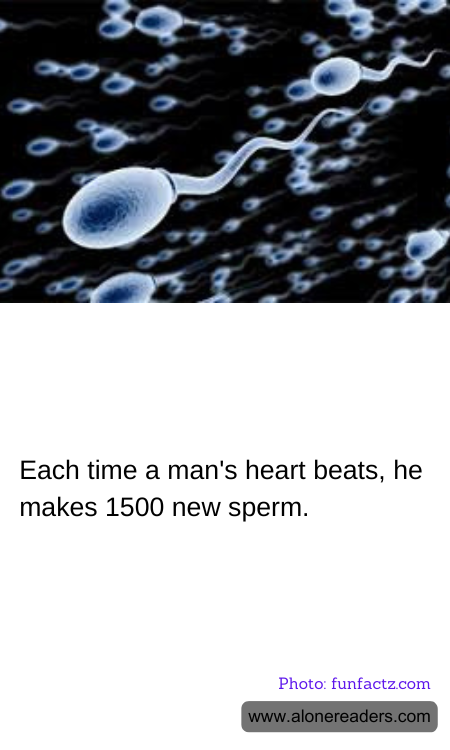
The human body continually demonstrates its astonishing capability for renewal and regeneration, one of the most remarkable examples being sperm production in males. An often cited statistic is that with each heartbeat, a man can produce as many as 1,500 sperm cells. This figure serves to underscore not only the prolific nature of sperm production but also its importance in human reproduction.
Spermatogenesis, the process of sperm production, occurs in the testicles within a complex network of coiled tubes called the seminiferous tubules. It is a sophisticated, multi-step process that transforms spermatogonial stem cells into mature spermatozoa. This process is driven by a variety of hormonal signals primarily orchestrated by the endocrine system, involving hormones like follicle-stimulating hormone (FSH) and testosterone.
Interestingly, the entire process of sperm production from stem cells to fully mature sperm takes about 64 days. However, the human body maintains a continuous supply, producing millions of sperm each day. This is crucial, considering that a single ejaculation might release anywhere from 20 to 300 million sperm cells, depending on a variety of factors including the male's overall health and frequency of ejaculation.
Moreover, each heartbeat sends not only blood through the body but an indication of life’s rhythm and vitality. That the production of sperm is tied to such a vital sign underscores its importance in the perpetuation of life. This connection between heart rate and sperm production highlights how critical robust cardiovascular and reproductive health is to fertility.
This prolific production capacity does, however, come with its challenges. For instance, the genetic integrity of sperm cells is paramount to healthy offspring, thus errors during the replication or division phases can lead to mutations, which impact fertility and can be passed on to future generations. Scientists continue to research ways to ensure the health and vitality of sperm cells, which have broader implications for understanding human fertility and its potential challenges.
In conclusion, human biology is deeply intricate and beautifully efficient. The statistic that ties sperm production to the heartbeat not only reflects this complexity but also emphasizes the interconnectedness of bodily systems. It serves as a reminder of the delicate balances within the body that support life at its most fundamental level.