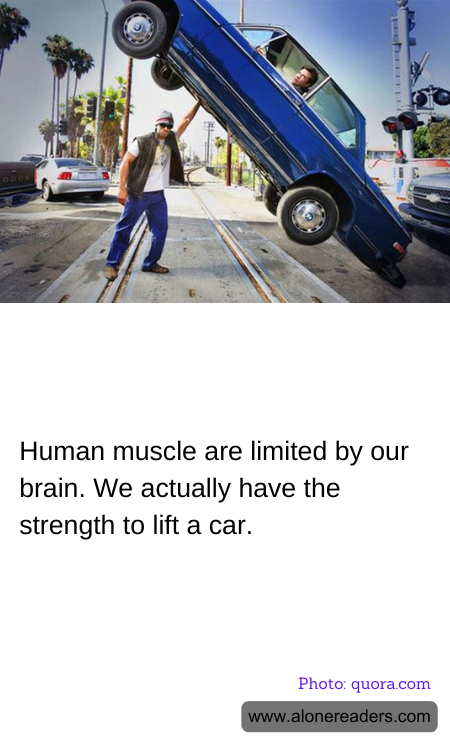
The human body is an intricate mechanism, finely tuned and capable of extraordinary feats under certain conditions. One intriguing aspect of our physiology is the relationship between muscle strength and brain regulation. It's often said that our muscles are significantly stronger than we usually need them to be in day-to-day activities. This leads to the fascinating notion that, under the right circumstances, a person could potentially lift a car.
At the core of this idea is the concept that the brain restricts our muscle's full capacity to prevent injury. Muscles are composed of fibers that contract to create movement. The brain regulates these contractions through nerve signals. If all the fibers within a muscle were to contract all at once, they could generate an enormous amount of force, much more than is typically necessary for everyday tasks. However, doing so could easily lead to severe tissue damage and other serious injuries.
The phenomenon of displaying superhuman strength, often in life-and-death situations, is known as hysterical strength. There are anecdotal reports of people lifting cars off trapped victims following accidents, suggesting that in extreme situations, the brain might temporarily lessen its regulatory grip, allowing muscles to work at near full capacity. Though well-documented instances are rare, and the scientific community has not fully verified these accounts, they continue to intrigue and invite more research.
Moreover, it is essential to understand that such feats are not without risk. The body is not designed to handle such extreme exertion as a norm. The aftermath can include torn muscles, joint damage, and long-term health issues. Training, such as that undertaken by powerlifters and other athletes, can increase the limits of what muscles can handle and safely exert, yet even these are carefully managed to prevent injury.
In everyday life, our brains limit our muscle use efficiently to conserve energy and minimize wear and tear, a testament to the body's wisdom in self-preservation. While the idea of lifting a car might illustrate the potential within our muscles, it also underscores the balance our bodies maintain between strength and safety. This intrinsic safeguarding mechanism by the brain ensures that we are more often strong enough for most tasks without risking our health needlessly. Thus, while our muscles do possess the theoretical capability to perform extraordinary feats, such strength is safeguarded by our brain's regulatory frameworks to promote overall well-being and longevity.
