More About This Card
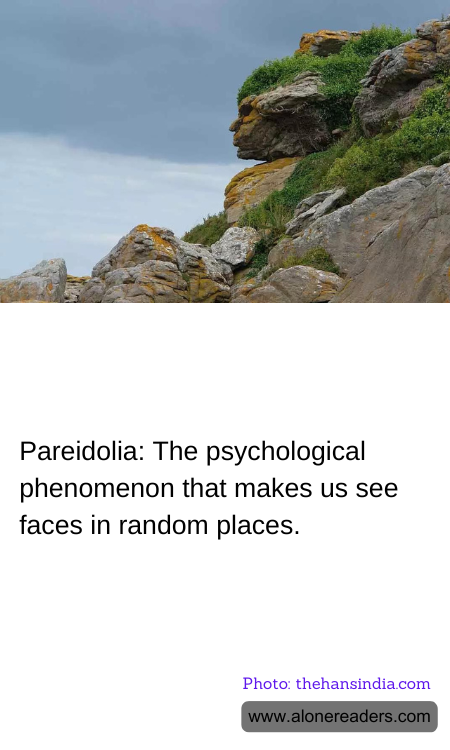
Pareidolia is a psychological phenomenon that explains why human beings tend to see familiar patterns, particularly faces, in random objects or unrelated data. This intriguing aspect of human perception has been studied across various fields, from neuroscience to psychology, and even plays a role in art and religion.
The brain's natural tendency to recognize faces is a result of evolutionary processes prioritizing the ability to quickly identify human features. This is crucial for social interaction and survival, allowing us to discern friend from foe or interpret emotional states. The fusiform face area, a region in the brain, is specifically dedicated to recognizing faces. When this area activates in response to stimuli that are objectively not faces, pareidolia occurs.
This phenomenon is not limited to visual experiences; it occurs in auditory experiences as well. For example, when people claim to hear hidden messages in songs or the sound of voices in the wind, it is a form of auditory pareidolia.
Culturally, pareidolia has been harnessed in various ways. In religions, followers sometimes report seeing sacred figures in mundane objects, which can strengthen their faith and communal bonds. In the arts, numerous artists, from Leonardo da Vinci who suggested using wall stains to spark artistic inspiration, to contemporary artists who purposefully create designs that leverage pareidolia, show that this phenomenon has a broad and powerful influence on creativity.
Moreover, pareidolia is not just a quirky trick of the mind; it has practical implications. For instance, it can shape the development of technologies in fields like artificial intelligence and computer vision, helping systems better recognize and interpret human emotions and reactions. Alternatively, understanding pareidolia can also help in diagnosing and treating psychological disorders, offering insights into human perception and mental health.
Thus, while often amusing, pareidolia reveals deep insights into the workings of the human mind, enhancing our understanding of perception and cognition. It shows us how our brains are wired to connect with others and how deeply we are programmed to seek meaning in our surroundings, even when none exists.