More About This Card
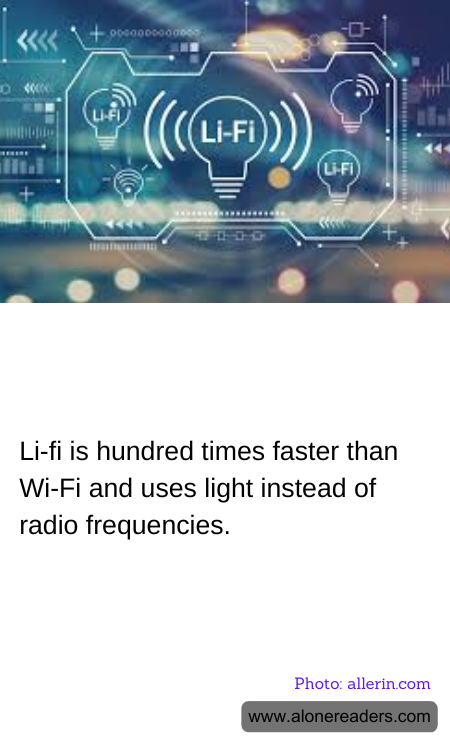
Li-Fi, short for Light Fidelity, represents a major leap in advancing wireless technology, boasting speeds up to 100 times faster than traditional Wi-Fi. This cutting-edge technology uses light waves instead of radio frequencies to transmit data, leveraging the capabilities of LED lights to provide both illumination and digital communication simultaneously.
The mechanics behind Li-Fi are straightforward but revolutionary. Data is transmitted by modulating the light output from LEDs at speeds imperceptible to the human eye. These rapid pulses are then received by a photodetector device, which converts them back into an electrical signal, thus completing the data transfer process. Because light waves have a much shorter wavelength than radio waves, they can transmit data at a much higher density, increasing speed and bandwidth capabilities dramatically.
One of the standout features of Li-Fi is its potential to significantly enhance secure communications. Since light cannot penetrate walls, Li-Fi offers a much more localized and secure connection, making it an ideal candidate for environments where security is paramount, such as military bases or corporate environments handling sensitive data.
Moreover, Li-Fi can be a game-changer in areas densely populated with wireless signals. Unlike Wi-Fi, which can suffer from interference due to overlapping frequency bands, Li-Fi's use of the visible light spectrum (400 THz to 800 THz) virtually eliminates interference from nearby Li-Fi systems. This makes it exceptionally reliable in environments like hospitals, schools, and office buildings where performance stability and security are crucial.
However, despite its impressive benefits, Li-Fi does face some limitations. The requirement for a clear line of sight between light source and receiver can be a hurdle in practical applications. Further, as light does not pass through solid objects, any barrier between the transmitter and receiver can interrupt the connection. Additionally, there is a need for infrastructure support for widespread adoption, as existing environments would need to be fitted with the appropriate LED technology and receivers.
In conclusion, while Li-Fi presents a thrilling glimpse into the future of internet technology with its superior speed and enhanced security features, it also necessitates thoughtful consideration regarding its deployment and integration into existing systems. As research and development continue to solve its current limitations, Li-Fi could soon redefine our expectations of wireless communications, potentially replacing or augmenting current Wi-Fi technology in many applications.