More About This Card
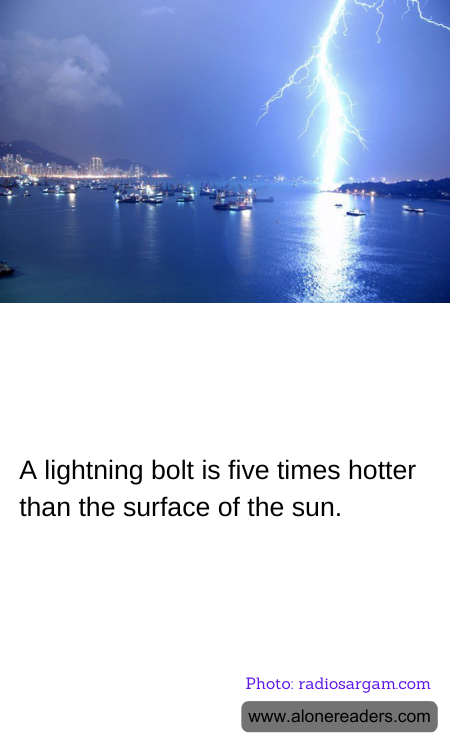
Lightning is one of nature’s most powerful and awe-inspiring phenomena. These brilliant flashes of electricity occur during thunderstorms and are the result of the rapid discharge of electrical energy in the atmosphere. What makes lightning particularly fascinating is its extreme heat. A typical lightning bolt can reach temperatures of approximately 30,000 kelvins (about 53,540 degrees Fahrenheit), which is indeed roughly five times hotter than the surface of the Sun.
The surface of the Sun, on the other hand, has a temperature of about 5,500 degrees Celsius (approximately 9,932 degrees Fahrenheit). While immensely hot in its own right, it pales in comparison to the fleeting, explosive heat of a lightning strike. This intense heat of a lightning bolt is what makes it capable of not only producing the brilliant white-blue flash but also causing air around it to rapidly expand, leading to the thunder we hear soon after seeing lightning.
The process of how lightning develops also adds to its mystique and power. It starts in storm clouds, which are charged with electrical energy. The buildup of opposite charges between the storm cloud and the ground—or within the clouds themselves—eventually becomes too great. The air, a natural insulator, initially prevents a free exchange of these charges, but under the right conditions, this resistance is overcome. The path is then cleared for a rapid discharge of electricity, visible as lightning.
The fact that lightning is hotter than the surface of the sun plays a crucial role in its potential for destruction but also its contribution to Earth's nitrogen cycle. The extreme heat causes nitrogen in the air to combine with oxygen, forming nitrogen oxides—compounds that are vital for plant growth and which replenish the nutrients in the soil.
Thus, while lightning is a dangerous spectacle, it is also essential for life, influencing both weather phenomena and the biological ecosystem. It reminds us of the power and complexity of Earth's atmospheric processes and continues to be an area ripe for study, offering insights into the broader dynamics of weather and planetary science. Exploring the properties of lightning and understanding its effects further could lead to improved weather forecasting algorithms and safety measures, reducing the harm it can do while respecting the critical role it plays in our environment.