More About This Card
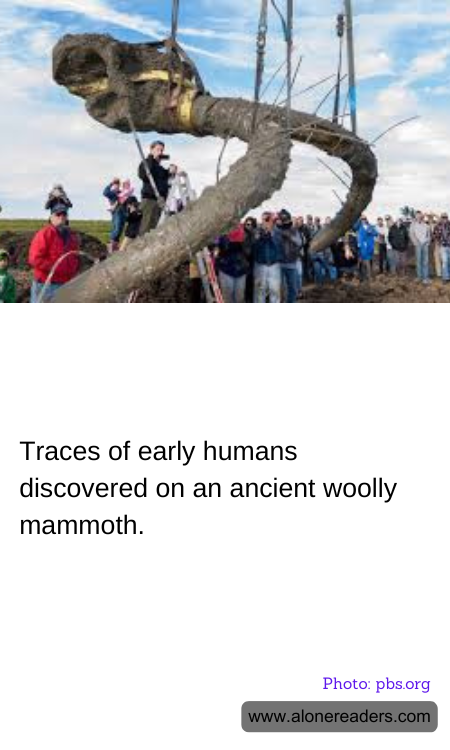
The discovery of traces of early humans on an ancient woolly mammoth bone has provided unprecedented insight into the interactions between our ancestors and now-extinct megafauna. This finding, resulting from a collaborative study among archaeologists and paleontologists, showcases the advanced methods our ancestors employed to survive and adapt in their challenging environments.
Researchers unearthed the woolly mammoth remains in Siberia, a region known for its rich Pleistocene-era fossils. The mammoth bone exhibited distinctive cut marks and indentations, which were meticulously analyzed and have now been directly attributed to human tools. This suggests that early humans either scavenged the mammoth after its natural death or may have played a role in its demise. The significance of this discovery lies in its implications for understanding the subsistence strategies of Paleolithic communities.
The markings on the bones were studied using advanced imaging techniques, which allowed scientists to reconstruct the methods used to carve the mammoth meat and break the bones. From this, it became evident that early humans had developed specific butchering skills to maximize the yield from the carcass. This would have been essential for their survival, particularly in harsh Ice Age conditions, where food sources were not always plentiful. Moreover, the tool marks provide clues about the types of implements used, pointing to a sophisticated level of tool craftsmanship that was previously underestimated for this period.
Isotopic analysis of the bone further revealed details about the mammoth's diet, health, and the environment at the time it lived. This can help paint a broader picture of the ecosystem dynamics and how early humans might have interacted with their environment. Additionally, the find generates more questions about the social structure of these ancient human groups, including how they shared resources, what their migratory patterns were like, and how they passed on knowledge and skills across generations.
This remarkable find not only sheds light on the practical aspects of early human life but also enriches our understanding of the cultural aspects of our ancestors. The interactions between humans and megafauna like the woolly mammoth likely played a pivotal role in the cultural narratives and myths that were told around ancient firesides, influencing the worldview and spiritual lives of these communities.
As excavations and research continue, each layer of data extracted from findings like these adds depth to our understanding of human history, providing a clearer view of the ingenuity and resilience of our early ancestors. This discovery not only highlights the sophistication of Paleolithic humans but also enhances our appreciation for the complexity of human evolution.