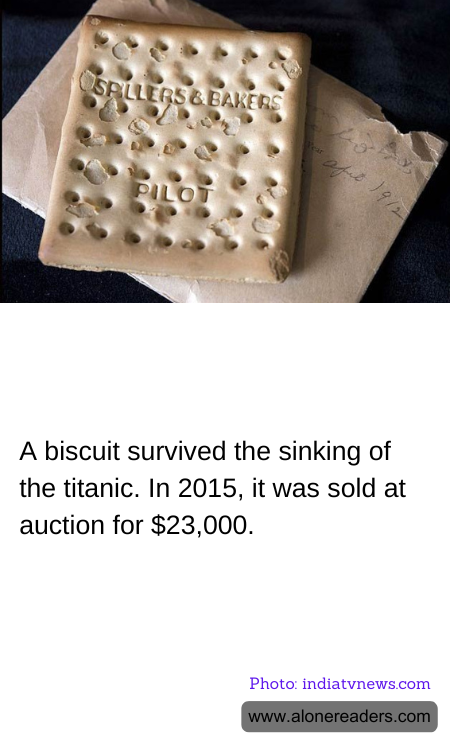
More About This Card
When RMS Titanic, the largest ship afloat at the time, tragically sank in the North Atlantic Ocean in 1912 after colliding with an iceberg, it left a myriad of stories and artifacts in its wake, giving us glimpses into life on board during its ill-fated maiden voyage. Among the lesser-known but fascinating items to surface from the wreckage is a biscuit - a simple Spillers and Bakers pilot biscuit that somehow survived the disastrous event.
This biscuit, part of the standard provisions stored on lifeboats and believed to have been part of the survival supplies aboard the Titanic's lifeboats, was preserved remarkably well over the years. It serves as a testament not only to the colossal tragedy but also to the mundane, everyday items that accompanied passengers and crew on their voyage.
Sold at auction in 2015, this biscuit fetched an amazing $23,000, underscoring the enduring fascination with all artifacts connected to the Titanic. The biscuit was bought by a collector, which highlights the profound interest in preserving and owning a piece of the historic narrative that the Titanic embodies. The price it fetched at auction reflects the rarity and unique nature of such an item, being a direct, tangible connection to the Titanic and its story, more than a century after it sank.
This biscuit, quite possibly the world’s most expensive biscuit ever auctioned, also opens a window into the human aspect of the Titanic’s journey - what passengers and crew might have eaten, how they prepared for potential disaster, and the provisions that were thought essential for survival at sea. Such artifacts, even the most humble and practical, bring us closer to understanding the real, lived experiences of those aboard the Titanic, making it more than just a story of catastrophe but also one of daily life in an extraordinary situation. Such items continue to captivate and intrigue, linking people of the present with those of the past in the shared unfolding of history.