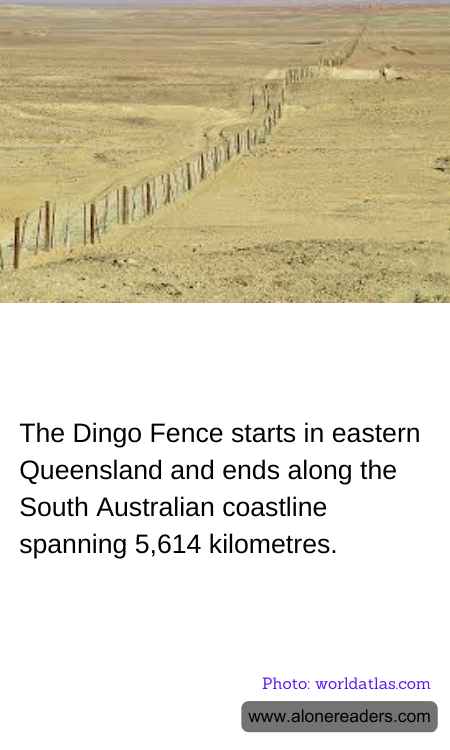
Spanning an impressive 5,614 kilometers, the Dingo Fence is one of the longest structures in the world and a significant feat of Australian ingenuity and determination. Constructed during the 1880s, this fence was originally built as a barrier to prevent dingoes, Australia’s native wild dogs, from entering the fertile southeast regions of the continent, thereby protecting the sheep flocks of southern Queensland.
Starting from Jimbour on the Darling Downs in eastern Queensland, the fence stretches all the way to the cliffs of the Nullarbor Plain along the South Australian coastline. The sheer expanse of this structure makes it three times longer than the Great Wall of China, traversing through varied landscapes and challenging terrains which includes the arid desert and rolling plains.
The fence itself is a robust construction of wire mesh that stands at a height of about 1.8 meters and is supplemented by a 30-centimeter apron buried underground to thwart any attempts by dingoes to dig their way under. Over the years, the structure has been continuously maintained and occasionally modified to adapt to the changing environmental challenges and the movements of the dingo populations.
Despite its primary goal to protect livestock, the Dingo Fence has had significant ecological impacts. By excluding dingoes from certain areas, it has inadvertently affected the population of kangaroos and other native species, leading to overgrazing and subsequent soil erosion in some areas. This impact has led to debates on the environmental sustainability of such a massive barrier and discussions on how to balance agricultural practices with conservation efforts.
Today, the Dingo Fence not only serves its original purpose but also stands as a historical landmark symbolizing human ingenuity and the complex relationship between Australia’s agriculture and its native wildlife. As debates continue, it remains a critical point of reference in discussions about land use, wildlife management, and environmental conservation in Australia.
