More About This Card
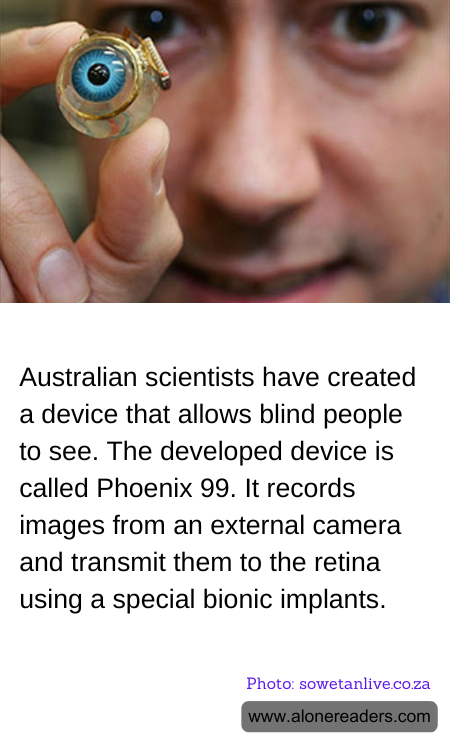
In a groundbreaking advancement, Australian scientists have developed an innovative device named Phoenix 99, designed to empower blind individuals with the ability to perceive their surroundings. This device marks a significant leap forward in medical technology, potentially transforming the lives of those affected by incurable visual impairments.
The Phoenix 99 system utilizes a sophisticated external camera to capture real-time images of the environment. These visual inputs are then processed and converted into signals that are compatible with the human nervous system. The crux of the technology lies in its state-of-the-art bionic implant, which is surgically embedded within the retina. This implant receives the processed signals and stimulates the retinal cells, emulating the natural visual process that occurs in a functioning eye.
What sets Phoenix 99 apart is its direct interface with human neural architecture, creating a symbiotic relationship between the technology and biological components. The device does not just send generic visual information to the brain but tailors these signals to match the user's individual neural setup. This customization is crucial for the effectiveness of the device, as it enhances the clarity and relevance of the visual data perceived by the user.
The implications of Phoenix 99 are profound, offering not just a restoration of sight, but also the potential for greater independence and improved quality of life for its users. Blind individuals, who might have relied on other sensory inputs or assistive technologies to navigate their environments, could achieve a level of visual independence previously thought unattainable.
Additionally, the development of such technologies could drive further research in neural prosthetics, leading to advanced solutions for various sensory and motor disabilities. As the Phoenix 99 undergoes further testing and refinements, it brings hope not only to those awaiting a breakthrough in visual rehabilitation but also signals a promising era of bionic integration in medicine, enhancing human capacities beyond natural limits.
While the device is still under development and extensive clinical trials are necessary to ensure its safety and efficacy, the initial success of Phoenix 99 offers a visionary outlook on the future of medical science and the treatment of visual impairments.