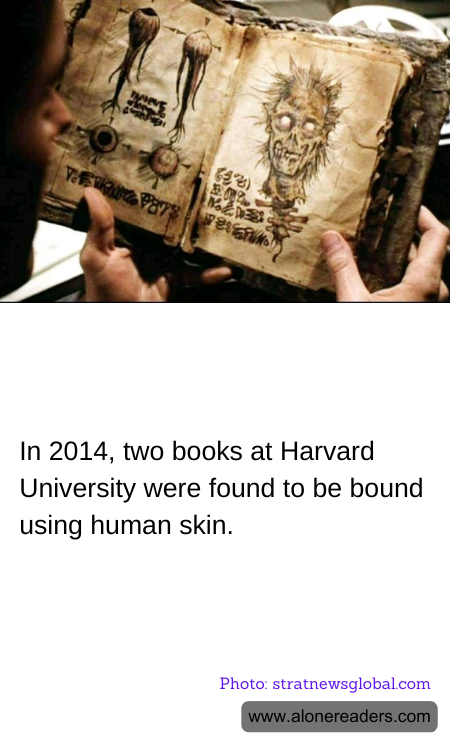
In 2014, an eerie discovery at Harvard University revealed that books in its collection were rumored to be bound in human skin. This practice, known historically as anthropodermic bibliopegy, was not uncommon in the 17th and 18th centuries, particularly among the bodies of executed criminals, medical cadavers, or the destitute. Libraries and collectors prized such bindings for their rarity and macabre allure.
Harvard's Houghton Library held one such book, Arsène Houssaye's "Des destinées de l'ame," which was a meditation on the soul's life after death. A note inside the book, written by Dr. Ludovic Bouland in the late 19th century, explained that the book was bound in human skin as a reflective testament to the themes of the text. A second book, owned by Harvard Medical School’s Countway Library, claimed a similar origin.
Scientific tests were eventually conducted to determine the veracity of these claims. The process involved peptide mass fingerprinting, or PMF, a technique that can effectively distinguish human skin from that of other animals. Results concluded that while the Countway Library's book was indeed bound in sheepskin, the one at Houghton Library contained human skin.
The revelation has sparked a conversation about the ethics of using human materials in art and literature. While historically bodies were often claimed without consent for medical research and public dissection, the idea of using human skin for bookbinding deeply disturbs contemporary sensibilities. It also raises questions about the criteria for displaying such items in educational or public institutions, considering their controversial nature.
Moreover, the existence of such books underscores a darker, often overlooked history of body snatching and dissection in medical science, where the poor and marginalized were disproportionately represented. These books exist as a physical reminder of a time when personal autonomy over one’s body post-mortem was not guaranteed, particularly for those without wealth or social standing.
As institutions such as Harvard contend with these artifacts, a debate continues over how to ethically manage and exhibit items made from human remains. Each object, grim as it may be, provides historical insight into the era's social hierarchies, medical practices, and cultural values.
