More About This Card
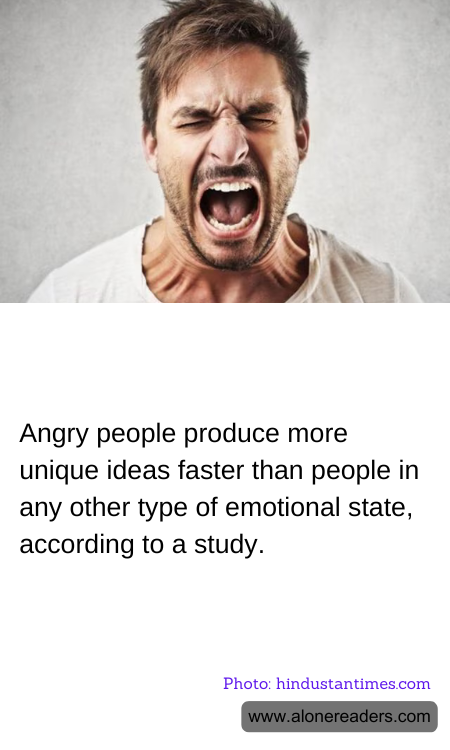
Anger is typically seen as a negative emotion, one that can lead to both stress and conflict. However, recent research suggests that there might be a creative silver lining to feeling angry. A study has found that angry individuals tend to produce more unique ideas at a faster rate than people in a calmer or more neutral emotional state. This intriguing finding challenges our conventional views on creativity and the conditions that foster innovative thinking.
Traditionally, positive emotions have been thought to be closely linked to creativity because they expand our mental resources, enabling us to think more broadly and associate ideas more freely. Positive states are said to facilitate an open, receptive mode of information processing which allows for a broader range of thoughts and ideas to emerge. On the other hand, negative emotions such as anger are usually associated with a narrow, more rigid cognitive focus. However, the sharp focus and intensity of emotion that come with anger seem to also aid in heightening the speed and uniqueness of idea generation.
The mechanism behind this phenomenon might be attributed to the way anger alters cognition. When angry, people are often driven by a sense of injustice or the urge to confront an obstacle, which significantly intensifies their reasoning and problem-solving skills. The intensity of the emotion can lead to a form of determination wherein individuals not only focus their energy but are also spurred towards action. This state can be unexpectedly conducive to creative problem-solving, as it pushes individuals to quickly generate a wide array of solutions that defy the norm, to address immediate issues.
Moreover, anger can subconsciously encourage risk-taking and deviation from standard reasoning, factors often essential for innovative outcomes. Angry individuals might be more likely to reject norms and common approaches, which are elements commonly recognized with high levels of creativity.
Nevertheless, this relationship between anger and creativity is not an advocacy for harboring anger or seeking out conflicts as a method to boost creative outputs. Excessive anger can still lead to psychological distress and can be destructive in the workplace and personal relationships. Therefore, while the connection between anger and increased creativity is fascinating, it also underscores the complexity of human emotions and the dual effects they can have on our functioning.
The implications of this study are significant, especially for creative professionals and organizations that prioritize innovation. Understanding the nuanced roles our emotions play in creative processes could help in structuring environments and tasks that harness the productive aspects of emotions like anger, without falling prey to their potential downsides. In creative fields, where the pressure to innovate is high, such insights can provide a new perspective on how to manage teams and individuals to foster ingenuity.