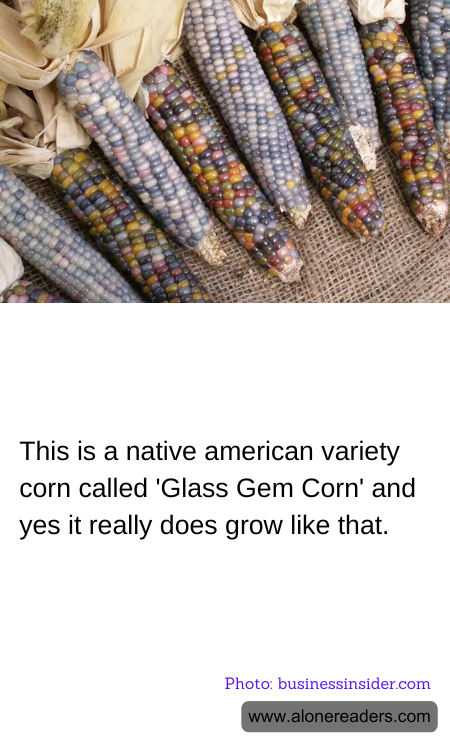
Glass Gem Corn, a stunning variety of corn native to North America, captivates anyone who sees it due to its vivid, jewel-like kernels. This colorful corn has not just visual appeal but also a fascinating story rooted in indigenous agricultural practices. Originating from Oklahoma, its development is credited to Carl Barnes, a part-Cherokee farmer who began growing traditional native corn varieties as a means to reconnect with his heritage.
Through selective breeding, Barnes isolated seeds from the colorful cobs and replanted them, eventually resulting in the rainbow-colored "Glass Gem" corn. The name itself reflects the striking appearance of the kernels, which shine like glass beads across the color spectrum. After Barnes, seeds were passed to Greg Schoen, who then shared them with the Native Seeds/SEARCH, a non-profit organization committed to preserving indigenous varieties of seeds.
Glass Gem Corn isn't just for admiration; it's a flint corn, meaning it can be ground into cornmeal or popped. However, it's not typically eaten fresh like sweet corn due to its hard texture. Each cob is a unique display of colors ranging from deep purple and fiery red to soothing blues and earthy greens, often shimmering as if polished.
The cultivation of Glass Gem Corn is similar to other corn varieties, though it thrives in environments that emulate its native high plains habitat. Moreover, growing this corn serves as an educational piece about genetic diversity and traditional agricultural methods of Native American cultures, highlighting the importance of preserving such unique crop varieties in modern agriculture.
Beyond being a statement piece in the garden, each ear of Glass Gem Corn carries the legacy and ingenuity of indigenous farming, offering both beauty and a tangible connection to the past. Its seeds are widely shared among gardeners and farmers who appreciate its history and the statement it makes about biodiversity and conservation. Glass Gem Corn continues to inspire a new generation of growers who see the value in preserving and celebrating native agriculture, making it a symbol of both beauty and resilience.
