More About This Card
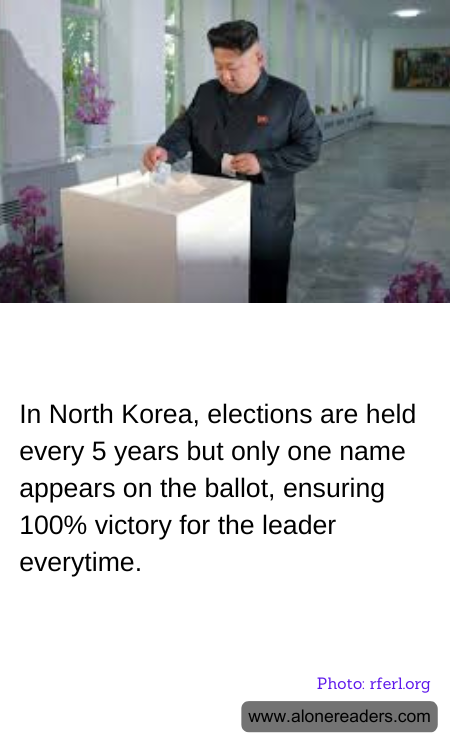
In North Korea, the electoral process is vastly different from what many would recognize as a conventional democratic system. The country holds elections every five years, during which citizens are called to vote for local assemblies, the national legislature, and at times, in indirect presidential elections. However, these elections are unique in that they typically feature only one candidate for each position, all of whom are pre-approved by the Workers' Party of Korea, led by the nation's supreme leader.
At the heart of North Korea's political system is the concept of the "monolithic ideological system," which essentially aims to unify the collective thought and behavior of the population under the guidance of the ruling Kim family. This approach ensures that the supreme leader, currently Kim Jong-un, does not face any opposition. Therefore, during elections, the ballot presents only one name for any given office, essentially coercing the electorate into a unanimous endorsement of the party-selected candidates.
The consequence of such a system is a facade of democratic participation, while essentially operating under a totalitarian regime. Voters are not offered a choice between different policies or candidates and the electoral process serves more as a ritual of affirming loyalty to the supreme leader and his party rather than a genuine contest of ideas. Reports from defectors and international observers indicate that there is an atmosphere of compulsion around the voting process, with a societal expectation to confirm the party’s candidates. Not participating, or even worse, voting 'no', could potentially lead to dire consequences, including surveillance, punishment, or social ostracism.
Visitors to the country during election times often describe the event as highly orchestrated, with widespread mobilization ensuring that virtually every citizen goes to the polls. The government promotes these high turnouts and unanimous “yes” votes as evidence of the regime's legitimacy and the unity of the North Korean people. Official claims typically boast a near-100% voter turnout and support for the given candidates, which the international community widely views as a reflection of the repressive state apparatus.
Understanding the nature of elections in North Korea is essential for comprehending the broader political climate of the region. The elections underscore the systemic suppression of dissent and the consolidation of power in the hands of the ruling elite, while masquerading as democratic processes. As such, they contribute to the perpetuation of the status quo, where the supreme leader's authority is displayed and reinforced every five years without the prospect of political renewal or genuine opposition.