More About This Card
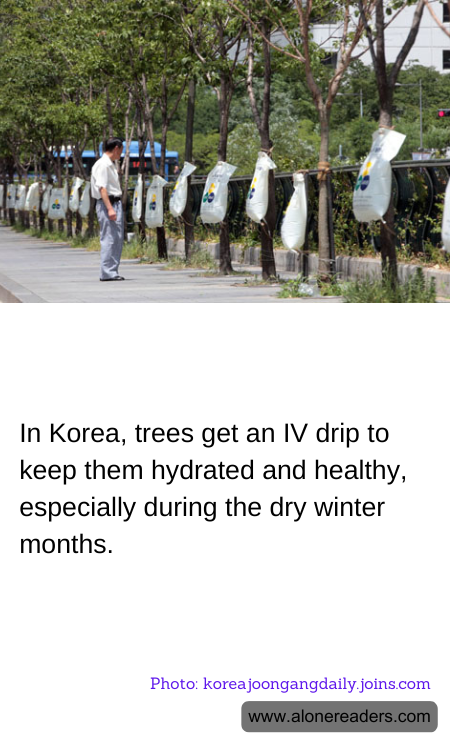
In South Korea, a unique and innovative approach to tree care involves the use of IV drips, traditionally seen in medical settings, to ensure trees remain hydrated and healthy during the harsh, dry winter months. This method, which reflects a deep-seated respect and concern for preserving nature, involves inserting an intravenous drip into the trunks of trees to directly administer nourishment and hydration.
The process starts by selecting trees that show signs of dehydration or stress, often exacerbated by the cold and dry conditions typical of Korean winters. These might include leaf wilting, premature leaf fall, or discoloration. Specialist arborists then carefully insert a small tube into the tree, much like a needle used in medical IV drips, through which a steady stream of water and essential nutrients, such as nitrogen, phosphorus, and potassium, is delivered directly to the tree’s vascular system. This bypasses the challenges posed by frozen or dry soil, from which trees might otherwise struggle to absorb moisture and nutrients.
The use of IV drips in tree care is indicative of South Korea’s advanced approach to urban greenery management. It provides an immediate solution to environmental stressors that urban trees face, helping to maintain their health and prolong their lives. This is particularly important in urban areas where trees play critical roles, from improving air quality and reducing urban heat islands to enhancing the aesthetic value of city landscapes and providing habitats for urban wildlife.
Moreover, the technique underscores a broader cultural appreciation for trees and green spaces, integrating traditional reverence for nature with cutting-edge technology. By extending the lifespan and health of trees, this practice not only supports ecological balance but also enriches the quality of life for residents and visitors alike by preserving the beauty and ecological function of urban environments.
Nevertheless, while technologically cutting-edge, the method is also a sign of the challenging conditions many urban trees face worldwide, necessitating such direct intervention for their survival and wellbeing. It highlights the need for comprehensive urban planning that includes adequate green spaces and considers the long-term health of city trees. By adopting and adapting such innovative practices, cities around the world can ensure their green spaces thrive even in the face of increasing urbanization and climate-related challenges.