More About This Card
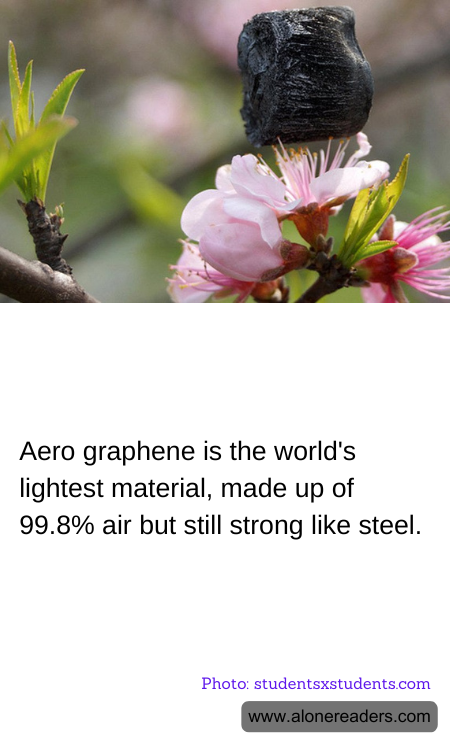
Aero graphene, also known as aerographite, is an extraordinary material that has captured the attention of scientists and engineers across multiple disciplines. It is considered the world's lightest material, consisting of 99.8% air. This incredible makeup gives it a porous, black, spongy structure while retaining an unbelievably light density of approximately 0.2 milligrams per cubic centimeter.
Despite its airy composition, aero graphene boasts impressive physical properties. It is strong like steel, capable of being compressed and then returning to its original form without any damage. This resiliency and strength, combined with its lightweight nature, make aerographite an ideal candidate for a range of innovative applications.
In the field of aerospace, aero graphene's lightness and strength are particularly valuable. The material can significantly reduce the weight of spacecraft and aircraft, leading to more fuel-efficient travel and potentially lower CO2 emissions. Its unique properties also open doors for its use in automotive manufacturing, where reducing vehicle weight is crucial for enhancing performance and fuel economy.
Beyond structural applications, aero graphene is also being explored for its potential in electronics and energy storage. Its high conductivity and large surface area make it an excellent candidate for use in supercapacitors and batteries. These devices could greatly benefit from aerographite's ability to conduct electricity while maintaining a very light weight, potentially leading to faster charging electronic devices that are lighter and more energy-efficient.
Moreover, aero graphene's high porosity could make it suitable for environmental cleanup projects. For instance, it could be used to absorb oil spills in water due to its ability to absorb many times its weight in organic molecules while floating on water.
Though its production is currently not widely scalable and remains costly, ongoing research is aimed at finding more efficient methods to produce aerographite, while expanding its possible applications. The development of aero graphene represents a significant milestone in material science, offering a multifunctional material that could help address some of the most pressing technological and environmental challenges of our time. The exploration of such materials paves the way for not just incremental improvements in existing technologies but potentially transformative innovations across various industries.