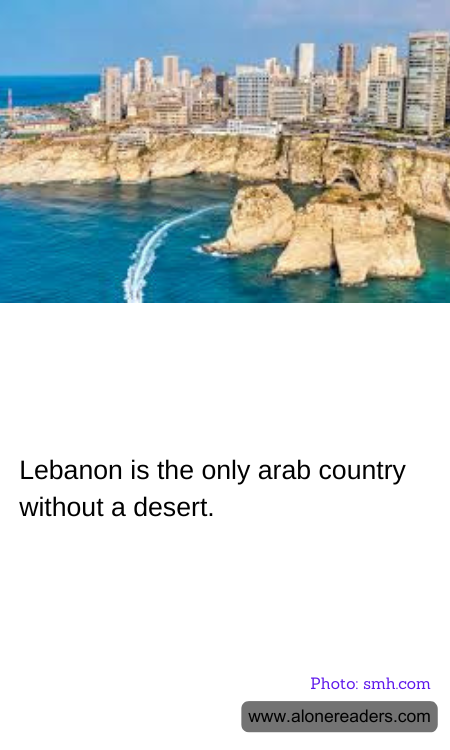
Lebanon, a country rich in history and culture, is uniquely distinguished among Arab nations by its lack of a desert landscape. Unlike its neighbors, Lebanon boasts a lush, varied topography that includes mountains, valleys, and a famous coastline along the Mediterranean Sea. This geographical diversity not only sets it apart in the Middle East but also contributes significantly to its cultural and social identity.
The Lebanese landscape is predominantly characterized by its four mountain ranges, which run parallel to the coast and form the backbone of the country. The highest of these, the Mount Lebanon range, rises to nearly 3,088 meters at its peak. Between these mountain ranges lie fertile valleys, such as the Bekaa Valley, a major agricultural hub known for its vineyards and produce. The Mediterranean climate, with wet winters and hot summers, allows for a rich biodiversity and lush vegetation, contrasting sharply with the arid conditions typically found in many other parts of the Arab world.
The absence of a desert has influenced many aspects of Lebanese life, from the diet, known for its wide variety of fresh fruits, vegetables, and grains, to the outdoor activities that attract tourists and locals alike. The country's rivers, like the Litani and the Orontes, play a crucial role in supporting agriculture, which is more diversified than in many neighboring countries.
Furthermore, Lebanon's maritime heritage is central to its identity. Historically, the ancient city-states of Tyre and Sidon were prominent maritime powers, and today, Lebanon's ports continue to be vital for trade and the national economy. The shorelines, often teeming with beaches and vibrant urban scenes, contribute to a lifestyle that heavily revolves around the sea.
However, Lebanon's unique geography also brings certain challenges. The absence of vast, flat desert lands, which in other parts of the Middle East have been used for large-scale agricultural projects or for deriving economic benefit from oil reserves located beneath the desert floor, means Lebanon has had to take a different path in economic development, emphasizing services and banking. Additionally, the rugged terrain can make transportation and infrastructure development more challenging and costly.
Despite these challenges, Lebanon’s distinctive lack of a desert is one of its many charms, offering a climate and landscape that stands out in the Arab world. This geographical feature influences many aspects of Lebanese culture, from culinary traditions to architectural styles, making it a unique and vibrant country in the Middle East.
