More About This Card
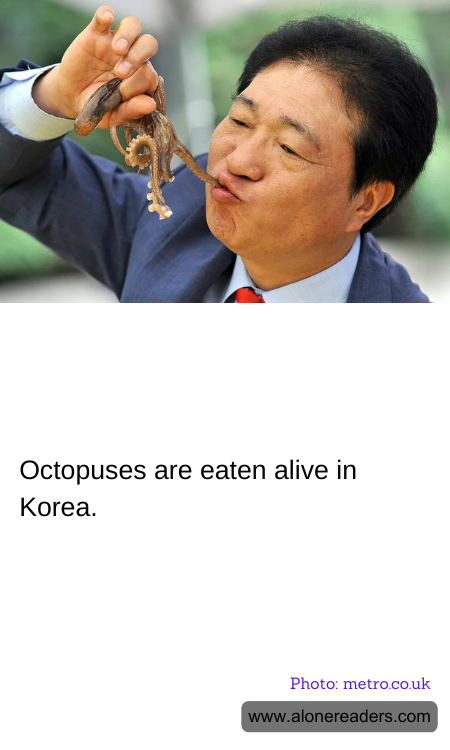
Eating live octopus is a practice that takes place in some parts of Korea and has gained international attention due to its controversial nature. The dish, known locally as "sannakji," typically involves a small octopus, known as nakji, which is either served whole or cut into pieces while still alive. It is often accompanied by sesame oil and sesame seeds, and eaten immediately.
The consumption of live octopus is rooted in Korean tradition, where it is appreciated for its supposed health benefits and freshness. Some believe that consuming live seafood enhances vitality and brings various healthful properties, a belief that echoes through many traditional Korean seafood dishes. However, the dish is not without its hazards. The suction cups on octopus arms are still functional even when severed or when the animal is not completely dead. These suction cups can stick to the throat or mouth, posing a choking hazard. Diners are advised to chew thoroughly before swallowing to reduce the risk of choking.
Ethically and morally, the act of eating live octopus has been met with controversy and criticism, particularly from animal rights organizations and activists who argue that the practice is cruel and causes unnecessary suffering to the octopus. Octopuses are cephalopods, known to possess complex nervous systems, exhibit intelligent behavior, and even use tools, which adds another layer to the ethical debate surrounding the consumption of live octopuses.
Internationally, this aspect of Korean cuisine can provoke both curiosity and revulsion, often clashing with Western views on animal welfare and humane treatment. This cultural difference highlights the broader dialogues about the ethical treatment of animals used for food, and how cultural practices and sensitivities vary widely around the world.
Despite the controversies, sannakji remains a popular and celebrated part of Korean cuisine among certain circles. It is served in many seafood restaurants throughout the country, particularly those specializing in fresh seafood, and it continues to attract both local aficionados and daring tourists eager to experience this unique aspect of Korean culinary culture. Restaurants that serve live octopus adhere to strict preparation standards to ensure the dish is served as intended, underscoring the ongoing demand and cultural significance of this practice.