More About This Card
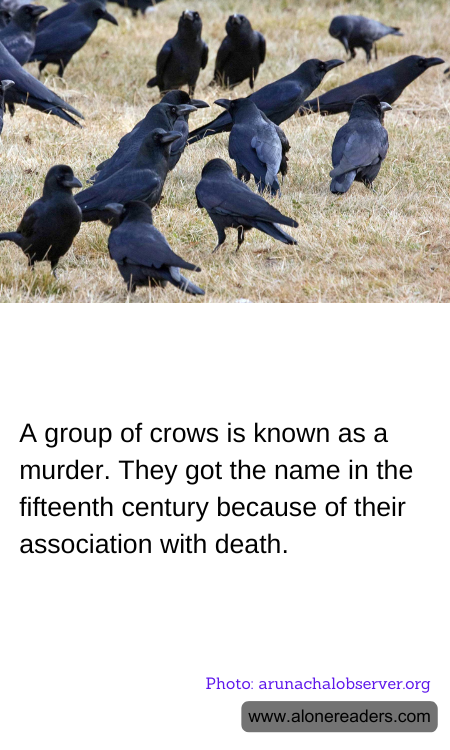
A group of crows is famously referred to as a murder. This term, steeped in the mystery and macabre, dates back to the fifteenth century and reflects the dark, often ominous image crows have carried through history. Crows, with their black plumage, haunting calls, and scavenging nature, are commonly associated with death and the afterlife in various cultures. Historically, these birds have often been seen in large numbers around battlefields, where they fed on the deceased, which could be why they evoke such morbid imagery.
The term "murder of crows" comes from a time when groupings of many animals had colorful and poetic names, such as a pride of lions or a gaggle of geese. These terms were not simply utilitarian labels but were imbued with cultural meanings and connotations. The choice of the word "murder" reflects the collective unease or superstition surrounding these intelligent yet misunderstood birds.
Crows are, in fact, highly social and intelligent creatures, known for their problem-solving abilities and complex social structures. They are capable of recognizing human faces, using tools, and even holding grudges. Their apparent ability to communicate with one another and their notorious cunning provides an interesting contrast to their somber image. Despite their intelligence and fascinating nature, the eerie aura that surrounds a group of crows— a murder—continues to permeate through folklore and modern day stories, illustrating humanity's longstanding fascination with these enigmatic birds and their grim repute.