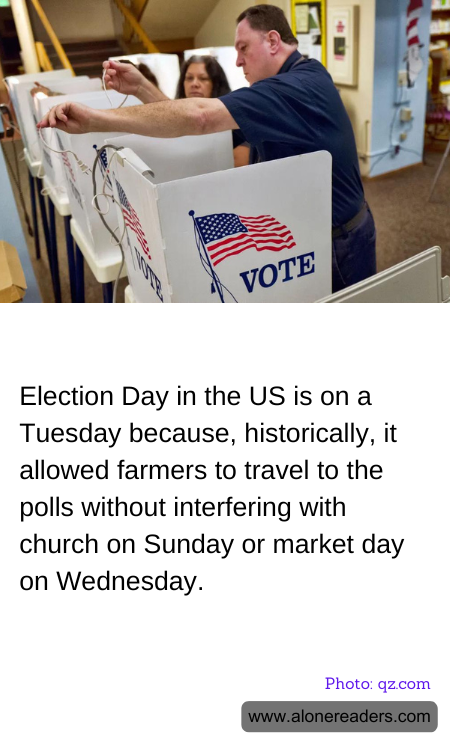
Election Day in the United States, held on the first Tuesday after the first Monday in November, has a historical background that is deeply intertwined with the agricultural practices and religious observances of early American society. This timing was deliberately chosen in the mid-19th century to accommodate the rhythms of farm life, which dominated the American economy at the time.
Back in the 1840s, when many Americans lived in rural areas and worked as farmers, travel was predominantly by horse-drawn vehicles and could take a day or longer. Holding elections on a day that allowed rural voters the time to travel to and from their polling places without interfering with their farming duties was crucial. Sunday, the traditional day of rest and religious worship, was not considered because it would prevent those of certain faiths from participating due to the Sabbath. Wednesday, which was typically market day, was also unsuitable as it was essential for farmers to buy, sell, and trade goods.
Tuesday then emerged as the most practical day. It provided Monday to travel to the county seat, Tuesday to vote, and then return home on Wednesday. By ensuring that Election Day did not conflict with either religious observances or market day, lawmakers aimed to maximize participation in the voting process.
The choice of November was equally strategic. By this time, the harvest was complete, but the worst of the winter weather had not yet begun, making travel manageable. This decision reflected a compromise between agricultural convenience and climatic practicality.
Despite the changes in modes of transportation and the reduction in the farming population, the tradition of holding federal elections on a Tuesday in November has persisted. However, in modern times, this schedule has been critiqued as it may not serve the majority of the non-agricultural workforce who might find it challenging to vote on a weekday. Hence, discussions and proposals about making Election Day a national holiday or moving it to a weekend continue, reflecting ongoing efforts to increase voter turnout and ensure everyone who is eligible can participate in the electoral process.
