More About This Card
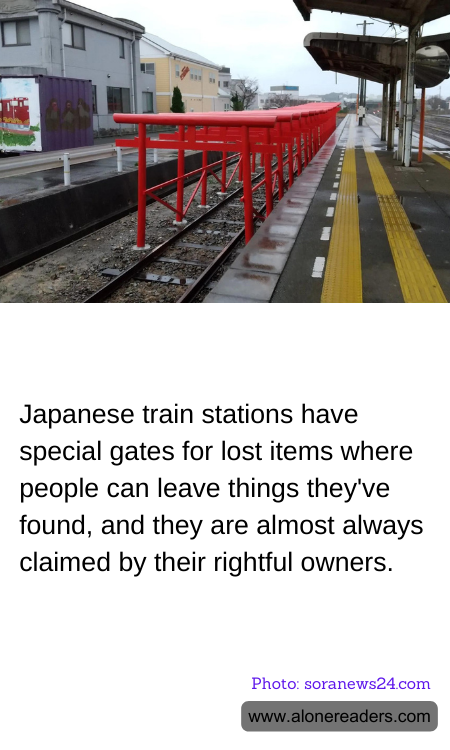
In Japan, the honesty and efficiency of the public transport system extend beyond punctuality and cleanliness. Japanese train stations feature special gates dedicated to lost and found items, embodying a remarkable cultural respect for personal belongings and community responsibility. These gates serve as designated spots where commuters can leave items they have found on trains or platforms, ensuring that lost possessions have a chance of being reunited with their rightful owners.
The system functions smoothly due to the high level of civic mindedness prevalent among the Japanese. The practice is not driven merely by policy but is deeply embedded in the culture, which places great emphasis on respect for others' property and a strong sense of community duty. The lost and found system is supported by meticulous record-keeping and organization, making it very effective. When an item is found, it is logged with details such as where and when it was found, and then stored safely until claimed. Detailed descriptions and timely logging make it easier for owners to retrieve their items by providing a straightforward description or proof of ownership.
This phenomenon highlights two compelling aspects of Japanese society: the integrity of individuals and a highly efficient bureaucratic system. The personal ethics demonstrated show a common understanding and practice of honesty, while the administrative efficiency ensures that the items are well-managed and returned promptly. Public trust in this system is high, and as a result, the majority of lost items, which range from umbrellas and wallets to electronics and personal identification, are indeed claimed by their owners.
The remarkable trust and efficiency have sparked curiosity and admiration from around the world, standing in stark contrast to the fate of lost items in many other countries, where they might never be reclaimed. The lost and found system in Japanese train stations not only showcases the unique blend of cultural etiquette and efficiency but also significantly reduces the potential stress and financial burden associated with losing personal items during daily commutes. Thanks to this kind of community care, losing an item on a train in Japan can be less of a setback and more of a testament to a system built on mutual respect and collective effort to do the right thing.