More About This Card
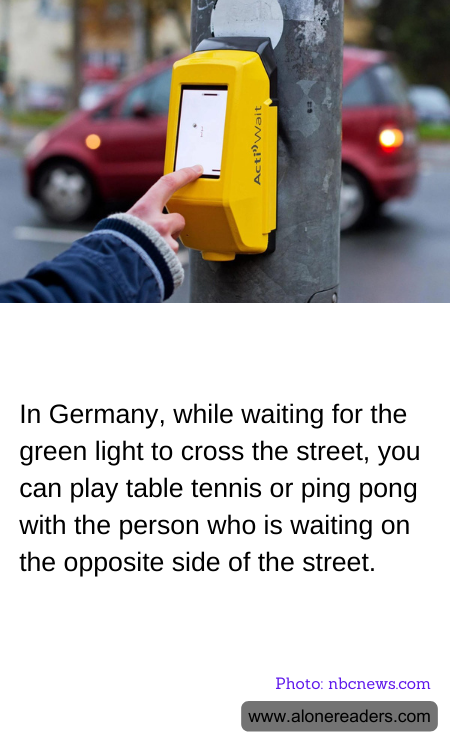
In Germany, urban spaces often blend functionality with fun, a concept taken quite literally at some pedestrian crossings. In certain cities, while waiting for the green light to cross the street, pedestrians can engage in a quick game of table tennis or ping pong with someone on the opposite side of the street. This innovative idea not only makes waiting for the green light more entertaining but also promotes social interaction and physical activity.
These ping pong tables, usually installed directly into the railings or nearby structures at pedestrian crossings, are equipped with paddles and balls securely attached to the tables to prevent loss or damage. The tables are designed to withstand weather and frequent use, ensuring durability throughout the year. Embedded in the waiting experience, this playful infrastructure allows pedestrians to interact in a friendly game, turning a mundane activity into a moment of joy and engagement.
The concept was introduced as a part of broader urban design initiatives aimed at enhancing public spaces and encouraging a more active, community-oriented urban lifestyle. The idea is to make the urban environment not just a space to pass through but a place to engage and connect. This approach aligns with wider urban trends in Germany that prioritize sustainability, public well-being, and social interaction.
The feedback on these ping pong tables has been largely positive, with many enjoying the unexpected opportunity to play and meet new people. This novel feature is just one of the ways cities in Germany are striving to reimagine public spaces, making them more livable and dynamic. Through such initiatives, urban life becomes not only more convenient but also more enjoyable, providing residents and visitors alike with unique experiences that enrich daily life.