More About This Card
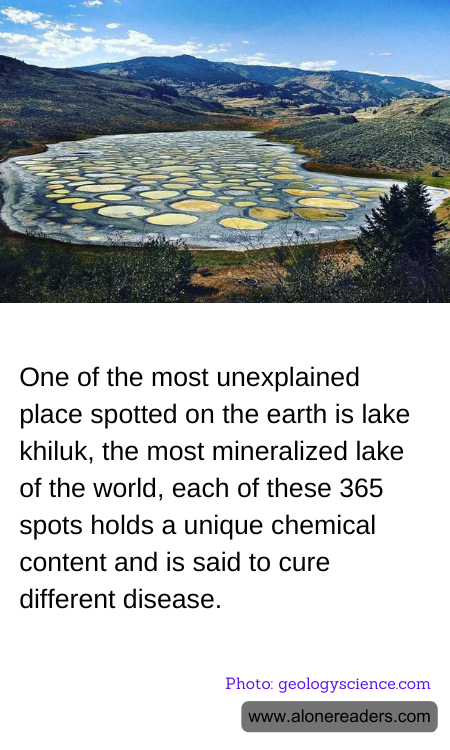
Located in the southern part of British Columbia, Canada, Lake Khiluk, also known as Spotted Lake, holds the title of being the most mineralized lake in the world. It is famously known for its 365 separate pools of mineral-rich water that appear as eye-catching spots, each distinctly different from the other. This extraordinary specificity makes Lake Khiluk a remarkable study in geography and holistic medicine alike.
The phenomenon behind its distinct spotted appearance primarily stems from the evaporation of the lake's water during the summer months. This process leaves behind circles filled with highly concentrated minerals such as magnesium sulfate, calcium, and sodium sulfates. These pools can also contain high concentrations of eight other minerals and possibly some traces of four others, a concentration almost unique to this body of water. Additionally, the varying mineral concentrations lend different colors to each pool—ranging from blue, green to yellow, depending on the mineral composition.
Local indigenous communities have long held Lake Khiluk in high esteem. They consider it a sacred site, not just for its visually stunning nature but also for its supposed medicinal properties. Every spot is thought to treat a different illness, and traditionally, these waters have been used for therapeutic purposes. The belief in the healing power of Lake Khiluk's waters is deeply ingrained in their cultural and spiritual lives, enhancing its mystique and reverence further.
The appeal of Lake Khiluk isn't just rooted in its healing properties or mineral wealth. Its ecological and geological significance attracts scientists and environmentalists from around the world. They are keen to understand the intricate balance of such a unique ecosystem and the sustainability challenges it faces, particularly in light of climate change and increasing tourist activities which might potentially disrupt its delicate balance.
However, while Lake Khiluk invites curiosity and admiration, it is a sensitive environmental area that requires respect and protection. The interest has to be balanced with initiatives to preserve its pristine condition and the integrity of its waters. As such, study and tourism in Lake Khiluk are regulated strictly to prevent contamination and preserve its unique characteristics for future generations to observe and appreciate.
In closing, while the full benefits and mysteries of Lake Khiluk’s waters are not entirely scientifically verified, the lake remains a fascinating blend of natural wonder and cultural heritage, representing a unique intersection of geography, wellness, and indigenous tradition. Whether visited for its scenic beauty or its mystical healing spots, Lake Khiluk undoubtedly remains one of the most intriguing places on earth.