More About This Card
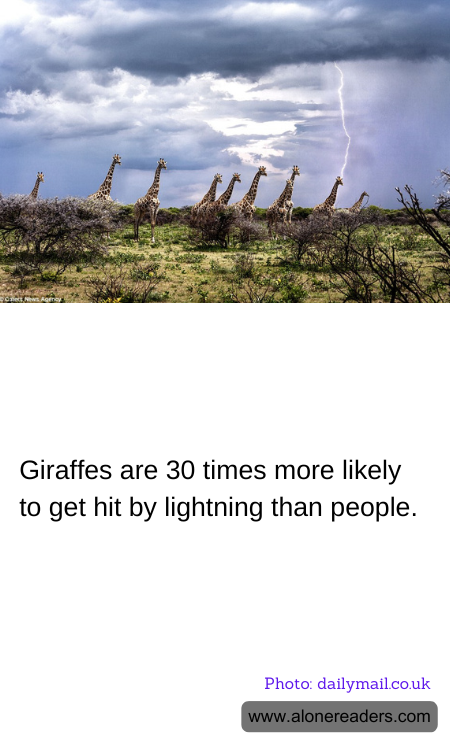
Giraffes, towering creatures native to the grasslands of Africa, hold the peculiar distinction of being significantly more likely to be struck by lightning compared to humans. This fact, striking as it may seem, is primarily attributed to their impressive height. Giraffes are the tallest land animals on Earth, with adult giraffes often reaching heights up to 18 feet (5.5 meters).
The height of these majestic animals makes them more vulnerable during thunderstorms, particularly in the open savannas where tall trees are sparse. As giraffes often stand taller than the surrounding landscape, they can become natural lightning rods. Lightning typically strikes the tallest point in an area, so in a tree-scarce environment, that point is often a giraffe.
The susceptibility of giraffes to lightning strikes can have significant implications for their populations, which are already threatened by habitat loss, poaching, and human-wildlife conflicts. Moreover, the survival rate for any animal, including giraffes, after a lightning strike is notably low, as these powerful electrical discharges can cause severe injuries or be instantly fatal.
Conservationists are keenly aware of the risks that giraffes face from natural phenomena such as lightning, but mitigating these risks is challenging. The vast areas where these animals roam and the random nature of lightning strikes make it nearly impossible to protect them specifically from this threat. Instead, efforts are more broadly focused on habitat preservation and expanding safe, natural environments for giraffes that might at least provide more natural shelter options such as taller trees that could potentially draw lightning away from the giraffes themselves.
Understanding the unique challenges that giraffes face, including their increased risk of lightning strikes, underscores the complexity of wildlife conservation and highlights the need for comprehensive strategies that address both human-induced and natural threats. By promoting and engaging in efforts to protect giraffe habitats, we can contribute to the longevity and health of their populations, ensuring that they continue to thrive for generations to come.