More About This Card
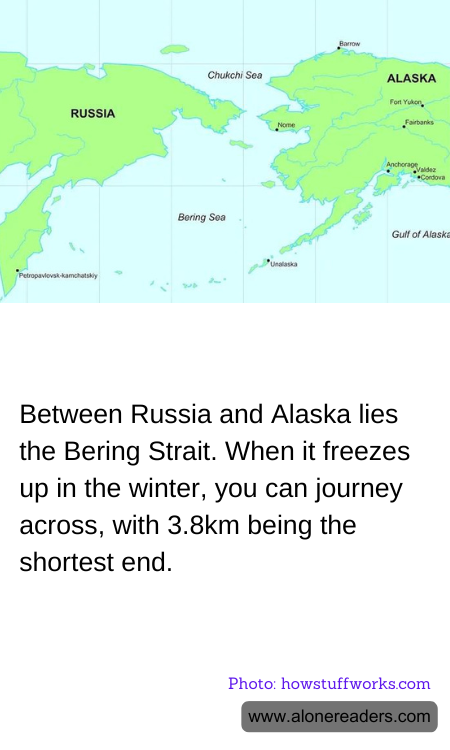
The Bering Strait, a narrow body of water between Russia and Alaska, is a geographical and historical landmark that captures the imagination of explorers and historians alike. Stretching approximately 82 kilometers (51 miles) wide at its narrowest point, the strait connects the Arctic Ocean with the Bering Sea and separates Russia and Alaska at their closest points by just 3.8 kilometers (2.4 miles).
During the winter, the harsh, frigid temperatures cause the surface of the Bering Strait to freeze, transforming the barrier between the two continents into a temporary frozen bridge. This phenomenon occasionally allows for the possibility of crossing from one continent to the other on foot or via snowmobile, although such journeys are fraught with danger due to the unpredictable weather conditions and shifting ice.
The concept of a land bridge during the Ice Age, known as Beringia, is central to the theory of migration that explains the presence of the first humans in the Americas. Scholars believe that ancient nomadic groups traveled this frozen pathway from Asia to North America, hunting and gathering as they went. Today, this historical migration continues to intrigue scientists, who study the genetic, geographic, and archaeological evidence to map out these ancient patterns of human movement.
Moreover, the Bering Strait has significant strategic and commercial importance. It serves as a crucial location for maritime routes, particularly as melting ice caps are opening new passageways for ships. This brings attention to issues of sovereignty and environmental protection, as nations and companies navigate the opportunities and responsibilities presented by this changing landscape.
The crossing of the Bering Strait, whether on ice or by sea, symbolizes a connection not just between two places, but between past and present, challenge and opportunity, inviting continual exploration and discovery.