More About This Card
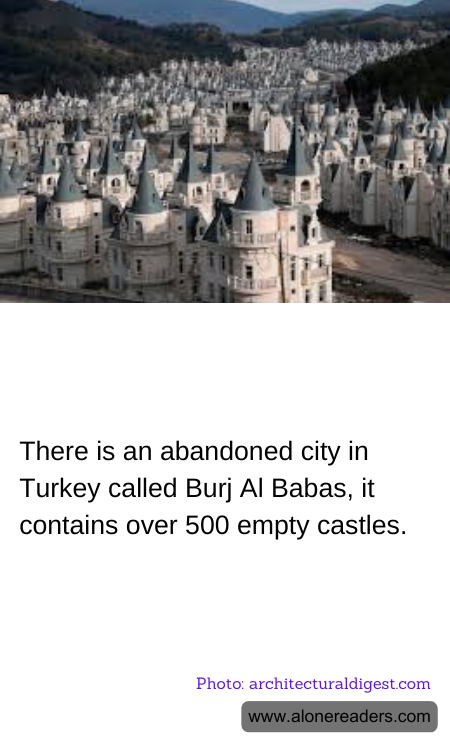
Nestled in the picturesque landscape of northwestern Turkey, near the town of Mudurnu in the Bolu Province, lies an eerie and fascinating sight: Burj Al Babas. This ambitious development project aimed to create a luxurious housing estate echoing a fairy-tale aesthetic, marked distinctly by more than 500 mini-castles that now stand empty, a stark monument to economic optimism that faltered.
The project, initiated by the Sarot Group, broke ground in 2014 with aspirations of attracting wealthy Gulf tourists. Each of the Gothic-style chateaux sports identical façades, complete with cylindrical towers and pointed domes that echo the romantic splendor of European castles. Interior plans were equally opulent, designed to include modern kitchens, saunas, and even Turkish baths, spanning three floors. The vision was to blend luxury with fantasy, a secluded haven for affluent buyers.
However, the dream crumbled almost as quickly as it began. By 2018, financial troubles cascaded into an economic avalanche for the developers. Burj Al Babas became a casualty of Turkey's economic difficulties, exacerbated by high inflation rates and political instability that affected investor confidence and real estate values. The Sarot Group filed for bankruptcy, citing debts running into millions and failed to sell enough villas to finance the project fully. What was meant to be a bustling enclave of opulence is now a ghost town, with unfinished and uninhabited homes dotting the landscape.
Beyond its intended luxury, Burj Al Babas symbolizes the pitfalls of over-ambitious real estate ventures. Its rows of identical mini-castles, although structurally sound and aesthetically pleasing, serve as a poignant reminder of the perils of speculative investments without sufficient market research and financial prudence. The unsettling uniformity of the empty houses also raises questions about individuality and authenticity in architecture, echoing uniform suburban sprawls that often prioritize sameness over uniqueness.
Today, Burj Al Babas has garnered global curiosity, drawing visitors and photographers captivated by its surreal appearance. Its story is a sharp lesson in the dynamics of real estate and economy, a visually dramatic narrative that continues to unfold as discussions about possible revival plans surface. Whether these castles will ever find occupants or remain hollow echoes in the hills of Bolu remains an open-ended chapter in Turkey's real estate saga.