More About This Card
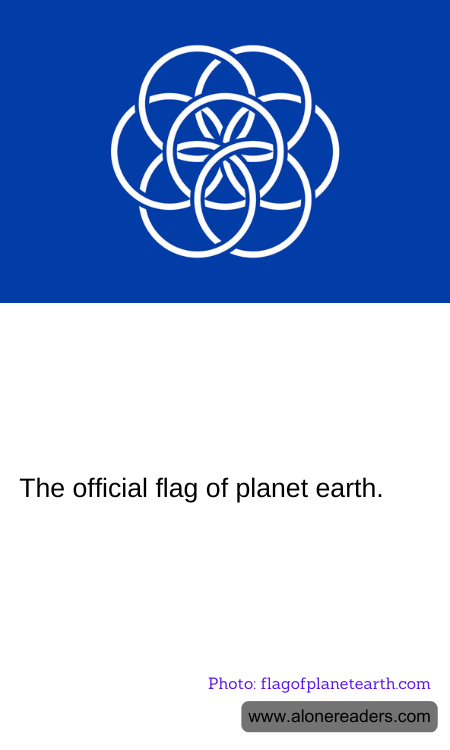
While Earth does not have an official flag universally recognized by all governments and nations, several designs have been proposed to represent the planet as a whole, especially in contexts like space exploration or global unity events. One of the most well-known designs is the "International Flag of Planet Earth," created by artist Oskar Pernefeldt in 2015 as part of his graduate project. The flag features seven interlocking rings forming a flower in the center against a deep blue background. Each ring represents one of Earth's continents, symbolizing unity among all people and the interconnected nature of the world's ecosystem.
The color blue was chosen to signify the importance of water and the oceans to life on our planet. The simple design and symbolism are intended to be easily recognizable and signify the concept of global cooperation. Pernefeldt's vision was for the flag to be used during space missions to represent Earth as a whole, fostering a sense of collective identity and responsibility.
Despite not being officially recognized by any government or international body like the United Nations, the flag has gained popularity and is sometimes used in educational settings and scientific research missions. The concept of a flag representing Earth highlights the growing understanding of our planet as a single, fragile ecosystem and the need for cooperation in tackling global challenges like climate change, space exploration, and international peace.
The lack of an official Earth flag is partly because national flags still play a dominant role in representing sovereign states and their interests. However, as space travel becomes more collaborative and humanity continues to face global challenges that transcend national boundaries, the idea of a common symbol like a flag for Earth might gain more acceptance and use in various international contexts. Such a symbol could play a crucial role in enhancing a sense of shared destiny and mutual responsibility among the Earth's inhabitants.