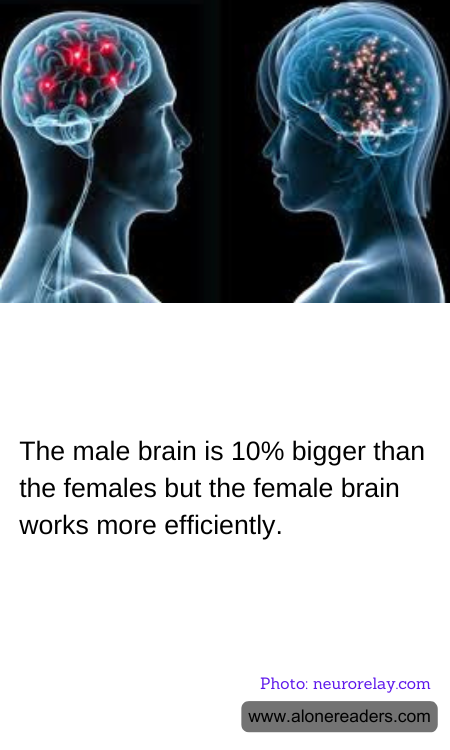
The human brain is a fascinating and complex organ, differing slightly between genders. Scientific studies have shown that, on average, the male brain is about 10% larger than the female brain. This difference has been observed consistently, yet it’s critical to note that bigger does not necessarily mean better when it comes to brain function.
The variance in size might initially suggest a difference in cognitive abilities, but that is not the case. Research indicates that despite the smaller size, the female brain often works more efficiently than its male counterpart. This efficiency manifests in various ways, particularly in neural strategies and connectivity. The female brain tends to utilize more densely packed gray matter, which involves neurons and synapses responsible for processing information. In contrast, males may have more white matter, which affects how the brain communicates between its different parts.
This structural difference could partly explain why women often excel in tasks involving complex cognitive functions like language, multitasking, and social cognition. These tasks are believed to benefit from more efficient local neural processing associated with gray matter. On the other hand, the structural advantages in the male brain may enhance spatial skills and motor abilities, functions more connected with white matter and the way different brain regions network.
Functional MRI studies have supported these observations by showing that women tend to use both hemispheres of the brain when performing certain tasks, whereas men may predominantly use one. This kind of cerebral integration in females could contribute to more efficient problem-solving abilities and communication skills.
However, it's important to approach these findings with caution. The differences in brain size and efficiency do not translate directly to intelligence or capability. Both male and female brains are capable of extraordinary feats and adaptability. Variations in brain structure and function enrich human behavior and cognition, allowing for a wide range of skills and talents across both genders.
Ultimately, understanding these differences is more about appreciating the diversity in human brains and less about defining or limiting what individuals can achieve based on gender. As neuroscience advances, it continues to unravel the intricacies of the brain, promoting a deeper understanding that can help foster an environment where everyone’s unique cognitive abilities are recognized and nurtured.
