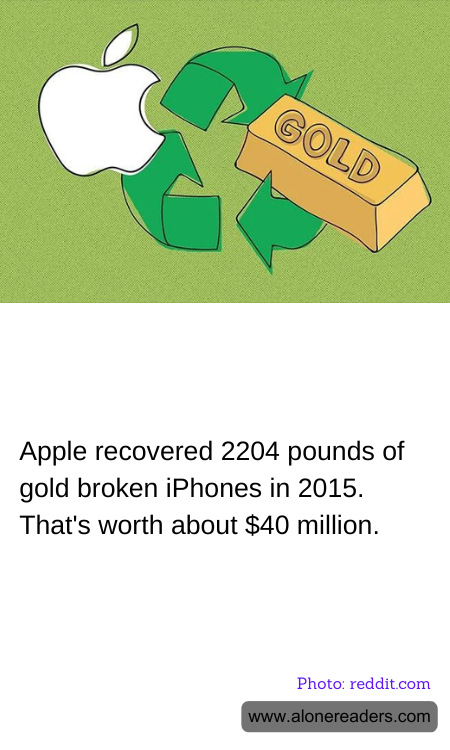
In an astonishing feat of recycling, Apple Inc. recovered a staggering 2,204 pounds of gold from broken iPhones in 2015, an endeavor that not only highlighted the value of repurposing electronic waste but also had a significant financial upside, amounting to approximately $40 million. This substantial recovery is part of Apple's broader commitment to environmental sustainability and resource efficiency, showcasing how technological waste, often overlooked, can be a goldmine—quite literally.
The majority of this recovery stems from the small components within iPhones that many users are unaware contain gold, primarily used for its excellent conductivity properties. Gold is found in the circuit boards and other internal parts of mobile phones, helping in faster transmission of data without much loss in connectivity. By recycling these devices, Apple is able to recover a substantial amount of gold that would otherwise end up in landfills, causing environmental harm.
The impact of such recycling practices extends beyond just environmental benefits; it also has a profound economic and resource efficiency angle. The cost of recycled gold is significantly lower than mining new gold, both in financial terms and environmental impact. Gold mining is known for being one of the most destructive activities environmentally, with impacts including massive landscape alteration, chemical runoff, and water pollution. By recycling gold from used devices, Apple helps reduce the demand for newly mined gold, thus lessening the environmental degradation caused by mining processes.
Furthermore, Apple’s initiative sends a powerful statement across the tech industry about the importance of product lifecycle management and the potential financial and environmental benefits of recycling. This not only encourages other companies to invest in sophisticated recycling technologies but also raises customer awareness and participation in recycling programs.
While 2,204 pounds might not seem like a vast amount in the grand scheme of global gold use, the action taken by Apple represents a significant step in the right direction. It illustrates how corporations can lead the way in sustainability — turning what is essentially waste into a resource that is both financially valuable and critical for manufacturing new products. It is a powerful example of how environmental responsibility and business goals can align to create outcomes that are beneficial not just for the company, but for the planet as a whole.
