More About This Card
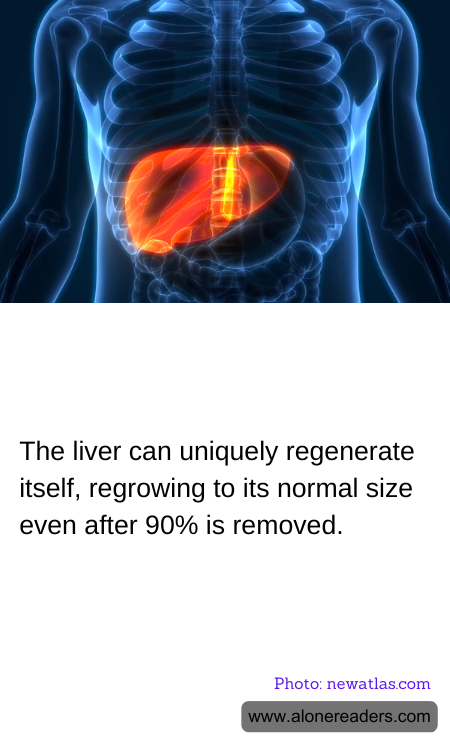
The liver is an extraordinary organ in the human body, renowned not only for its crucial functions related to digestion, metabolism, and detoxification, but also for its phenomenal ability to regenerate itself. This regenerative capacity means that the liver can regrow to its normal size even after significant portions of it have been removed, an attribute not seen in most other organs.
Scientists have studied liver regeneration for decades and have found that even if up to 90% of the liver is surgically removed, the organ can typically return to its normal size and function within weeks or months. This incredible regenerative process is vital not just for the survival of individuals who undergo major liver surgery, such as tumor removal or partial liver donation, but also offers insights into potential treatments for various liver ailments.
The liver's ability to heal and regrow comes from its unique cell types. Unlike most organs, which have a limited number of cells capable of division, nearly every cell in the liver has the potential to divide. After a portion of the liver is removed, the remaining liver cells, known as hepatocytes, begin to proliferate rapidly. This is not merely a swelling of the organ, but a true regeneration, where the liver grows back to regain its original volume and capacity.
The mechanisms controlling liver regeneration are complex, involving a variety of biochemical signals and pathways. These signals ensure that the growth occurs only until the liver has returned to its optimal size and function. Researchers believe that understanding these signaling pathways in greater detail could lead to breakthroughs in treating liver diseases such as cirrhosis or hepatitis, and might even provide clues for regenerating other organs.
Moreover, the liver’s resilience and regenerative capabilities pose important implications for liver transplants and therapies. Split-liver transplants, for instance, where one liver is divided between two recipients, are made feasible because of the liver's ability to regenerate. This not only doubles the number of people who can be treated with a single organ donation but also significantly impacts the organ transplant lists globally.
As research continues, the extraordinary nature of liver regeneration holds promise not only for those needing surgical interventions but also opens up the intriguing possibility of harnessing this capacity for broader regenerative medicine applications. By expanding our understanding of how the liver repairs and regrows, science could potentially revolutionize the treatment of a myriad of diseases and conditions, highlighting once again the liver’s profound role in health and medicine.