More About This Card
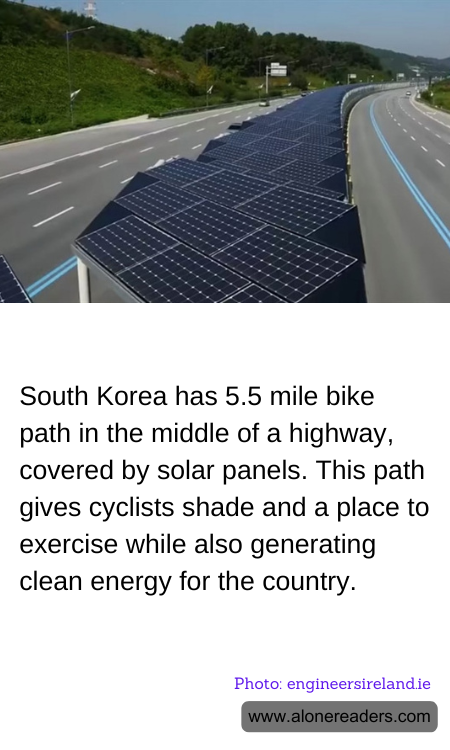
In an innovative blend of green energy and sustainable transport infrastructure, South Korea boasts a remarkable 5.5-mile bike path that is situated within the median of a bustling highway, all sheltered beneath a vast expanse of solar panels. This path not only offers cyclists a respite from the vehicle exhaust and noise but also plays a pivotal role in the country's efforts to harness renewable energy.
The solar panels that canopy the bike path are dual-purpose. Primarily, they protect cyclists from the sun and rain, providing a more comfortable and safer riding experience. Simultaneously, these panels capture sunlight and convert it into electricity, contributing significantly to the local grid. This setup is a clear demonstration of South Korea's commitment to innovative solutions in tackling energy consumption and reducing carbon footprints.
Strategically placed between the cities of Daejeon and Sejong, this bike path connects two major urban centers, making it a valuable commuting route for residents. It encourages a shift from motor vehicle reliance to more sustainable modes of transport like cycling, aligning with broader global movements towards health-conscious and eco-friendly living.
In terms of energy output, the solar panels generate a substantial amount of electricity, enough to support the lighting of the highway and the cycling path itself, with surplus being fed into the national grid. This not only improves energy efficiency but also cuts down on operational costs associated with highway lighting and maintenance.
Moreover, the initiative serves as an educational and inspirational model for other countries looking to implement sustainable practices. It shows that integrating solar power with transportation infrastructure can yield multifaceted benefits, from enhancing urban mobility to contributing to environmental sustainability.
This project aligns well with South Korea's ambitious plans to expand its renewable energy capabilities. By integrating green technology into everyday aspects of life, South Korea sets a precedent in the global arena for innovative urban planning and sustainability in transport. The success of this solar-paneled bike path could potentially spur similar projects worldwide, marking a step forward in the global transition to sustainable energy solutions.