More About This Card
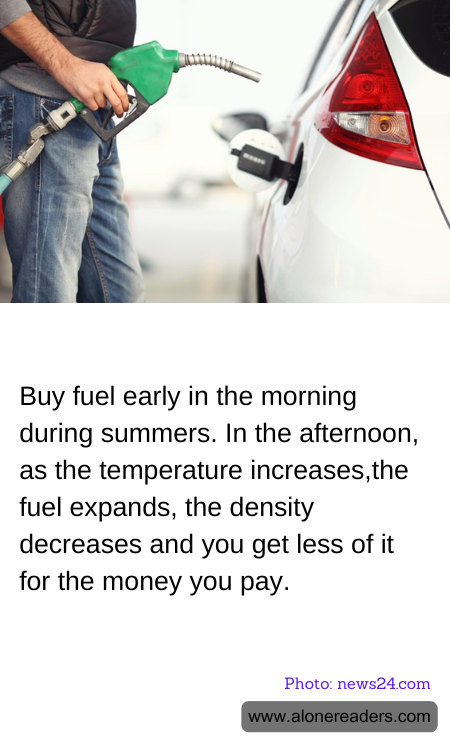
During the hot summer months, many drivers wonder how to get the most out of every gallon of fuel they purchase. One strategic approach that might surprise many is the timing of your fuel purchase. Buying fuel early in the morning, particularly during summertime, is considered advantageous compared to refueling later in the day. This is due to the way temperature affects gasoline and diesel.
Fuel, like many other substances, expands when heated and contracts when cooled. Gas stations store their fuel in large underground tanks where the temperature is more stable compared to the air above ground. However, as the ambient temperature rises through the day, the fuel stored in these tanks heats up and expands slightly.
This expansion means that when you pump gasoline into your vehicle during a warmer part of the day, each gallon you get is slightly less dense than it would be at a cooler time. In essence, the warmer the fuel, the more space it takes up, and thus, the less energy per gallon it contains. When you buy fuel in the cool early morning hours, you're likely getting a slightly denser fuel, which means more energy for the price paid.
Though the difference per gallon might be small, over time and across multiple fuel purchases, these small differences can add up, potentially leading to noticeable savings. Additionally, fueling up in the morning can also mean avoiding long lines and the midday rush, providing not just a potentially more energy-efficient fill-up but also a more convenient and faster one.
However, it’s important to note that while the theoretical savings from morning refueling make sense from a scientific standpoint, actual savings at the pump can be influenced by numerous factors, including pricing strategies of gas stations which can change throughout the day based on supply, demand, and competition. Therefore, while choosing to refuel in the early morning hours during summer can be a smart move for potential savings, it should be just one part of a broader strategy to improve overall fuel efficiency. This can include regular vehicle maintenance, tire inflation checks, and thoughtful planning of routes to minimize unnecessary driving. Combined, these strategies can contribute significantly to fuel cost reduction over time.