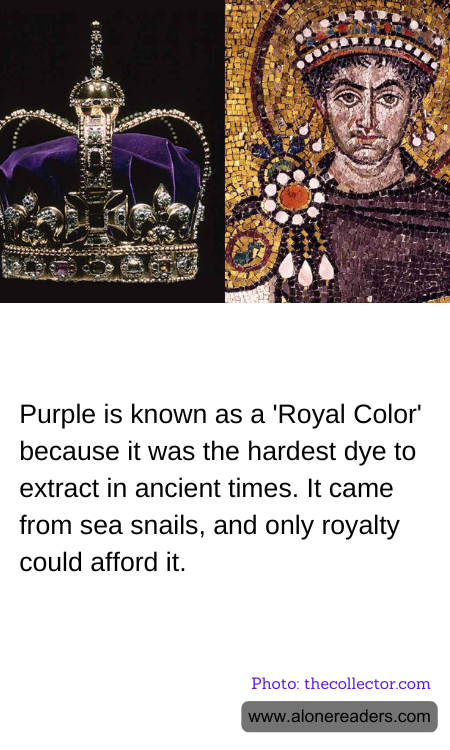
Purple has long been associated with royalty, nobility, and prestige due to its rarity and the cost of production in ancient times. This rich hue, often seen gracing the garments of kings and queens, has a history that's as colorful as the color itself. Historically, purple dye was incredibly difficult to produce. The most famous purple, known as Tyrian purple, was made from the secretions of a specific type of sea snail called the Bolinus brandaris.
The process of making Tyrian purple was extremely labor-intensive and costly. It is said that thousands of snails were required to create just one gram of Tyrian purple dye, and the extraction process was lengthy and odorous. This made purple fabric extraordinarily expensive and, therefore, accessible only to the wealthiest individuals, particularly monarchs and the upper echelons of society.
The exclusivity of the color added to its mystique and appeal among the elites. It became a symbol of power, wealth, and position, often used in royal garments and official regalia. In some cultures, sumptary laws were even enacted to restrict the use of purple to the royal family alone. For example, in Byzantine Empire, the emperors issued strict edicts that forbade anyone except the royal family from wearing purple.
The fascination with purple continued through the centuries, even as other means of producing the dye were discovered. With the advent of synthetic dyes in the 19th century, purple became more accessible to the general public, yet it has retained its association with luxury and grandeur. Today, purple is still used to signify special occasions and is a popular color in everything from fashion to graphic design, symbolizing creativity, wisdom, and experience.
Thus, purple remains a testament to its regal origins, a color steeped in history and wrapped in the aura of power and luxury. It serves as a reminder of the lengths to which civilization has gone to express social hierarchy and cultural values through color.
