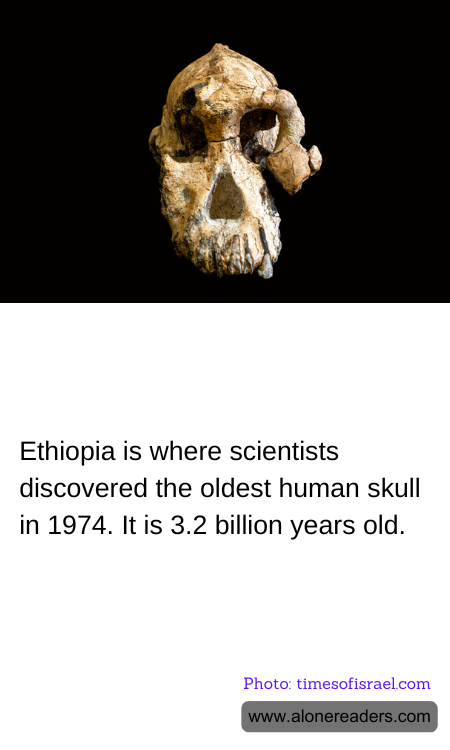
In 1974, a groundbreaking discovery was made in the Afar region of Ethiopia that tremendously influenced our understanding of human evolution. Scientists unearthed the oldest known human skull, which they estimated to be around 3.2 million years old, not billion as often mistakenly cited. This remarkable find belonged to a specimen famously known as "Lucy," classified under the species Australopithecus afarensis.
Lucy’s discovery was pivotal because it provided unprecedented insight into the appearance and lifestyle of early human ancestors. The almost complete skeleton was unique because it combined both human-like and ape-like features. For example, the pelvic and leg bones were structurally closer to those of humans, suggesting bipedalism or walking upright on two feet. This was a significant evolutionary development, indicating a shift from a life predominantly spent on trees to one that involved walking on the ground.
The implications of Lucy’s discovery extend beyond just the physical traits. They provide a snapshot of the evolutionary advancements during that time and the kind of environment our ancestors adapted to. The age of the skull places it in the middle of the Pliocene Epoch, a period characterized by significant climatic changes which likely influenced human evolution through altering landscapes and available resources.
Since the discovery of Lucy, numerous other findings have occurred within the same region, which have collectively contributed to the region's reputation as the "cradle of humanity." Each fossil provides more data points to help scientists piece together the complex puzzle of human evolution. The Afar region has continued to be an area of intense archaeological and anthropological interest, bringing to light new revelations that help us better understand the trajectory of our history.
The uncovering of Lucy's almost complete skull and skeleton was not just about adding a new member to the human family tree but also fundamentally challenged existing theories of human evolution. It underscored the complexity of our ancestral past and helped bridge certain gaps in our understanding of how modern humans evolved. The ongoing research and discoveries in Ethiopia continue to be crucial for providing further clarity about our ancient origins.
