More About This Card
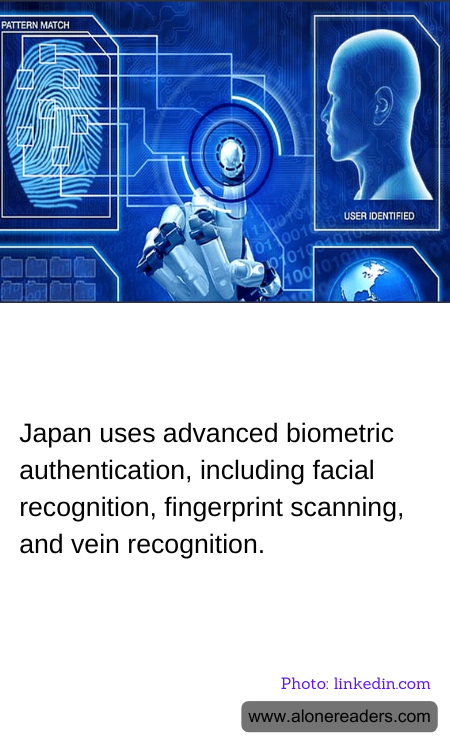
In recent years, Japan has emerged as a leader in adopting advanced biometric authentication technologies to bolster security and improve user convenience across various sectors. This move towards technologies like facial recognition, fingerprint scanning, and vein recognition not only enhances the nation's tech-driven image but also exemplifies their commitment to pioneering sophisticated security systems.
Facial recognition technology, in particular, has seen wide application across Japan, from airports to retail stores. At entry points like Narita International Airport, facial recognition helps streamline the identification process, speeding up immigration controls and enhancing security. This system cross-references visitors' faces against a pre-registered database, allowing for swift passage while maintaining rigorous checks. The technology is also increasingly being used in public surveillance to boost security measures in crowded public spaces, a practice that has gained momentum especially in preparation for international events such as the Tokyo Olympics.
Fingerprint scanning is another biometric technology widely utilized in Japan. It's mandatory for foreign visitors to be fingerprinted upon arrival, a practice that integrates immigration control with security strategy. Beyond security, fingerprint recognition technology is also employed in everyday commerce. Many smartphones and banking services incorporate these biometric systems, allowing for secure transactions and personalized access to services without the need for traditional passwords.
Vein recognition, though less ubiquitous than facial recognition and fingerprint scanning, presents a unique security feature that is gaining traction in Japan. Utilized in ATMs and some banking services, vein pattern recognition technology offers a highly secure method of user identification as vein patterns are extremely difficult to replicate or forge, providing an advanced level of security.
These biometric technologies not only offer enhanced security but also provide significant user convenience by simplifying and speeding up the authentication process. However, the widespread adoption of such systems raises important questions regarding privacy and data security. Japan has addressed these concerns by implementing stringent guidelines and regulations that govern the collection and use of biometric data, ensuring that these technologies are used responsibly and ethically.
Overall, Japan's embrace of advanced biometric authentication demonstrates a forward-thinking approach in both technology and security. By integrating these sophisticated systems into everyday life and critical infrastructure, Japan not only fortifies its defenses against security threats but also sets a global benchmark in the application of biometric technology.