More About This Card
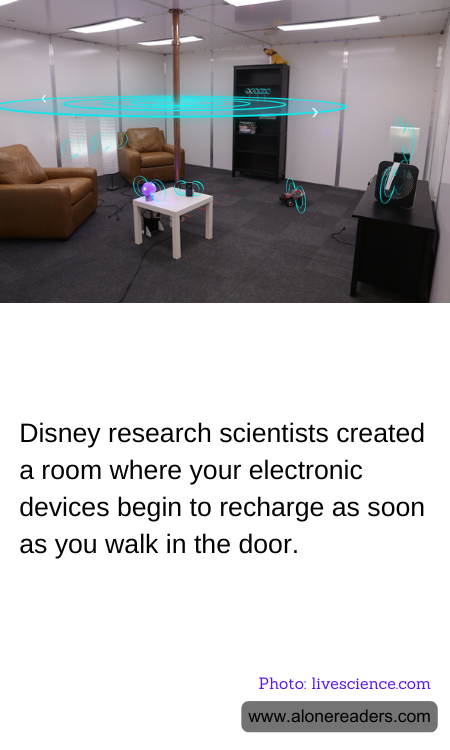
Imagine entering a room and having your electronic devices automatically start charging—no wires, no plugs, just seamless power transfer. This scenario, once a speculative element of science fiction, is edging closer to reality thanks to breakthroughs by Disney research scientists. They have developed a prototype for a wirelessly charging room designed to power up devices as soon as one steps through the door. This innovative technology could revolutionize how we interact with our electronic gadgets and the spaces around us.
The technology, based on quasistatic cavity resonance (QSCR), enables purpose-built structures to generate magnetic fields that safely transmit power to mobile devices. The method involves the installation of aluminum panels on the walls, ceilings, and floors, which are then used to distribute the magnetic fields throughout the room. A copper pole inserted in the center of the space houses a small gap filled with a dielectric material, which helps focus the magnetic fields. Devices equipped with a corresponding receiver can then convert this magnetic energy back into electricity, effectively charging the device without it ever needing to be plugged in.
The implications of such technology are extensive. In a domestic setting, it could lead to homes where the anxiety of low battery life for phones, laptops, or other rechargeable devices becomes obsolete. In the public or commercial sectors, airports, hotels, and coffee shops could provide customers with added value, improving user experience twofold. Moreover, the adoption of this technology in public spaces could drastically reduce the clutter and hazards associated with cords and charging stations, streamlining design and functionality in communal spaces.
Moreover, this technology highlights a shift towards more user-friendly and sustainable energy solutions. By reducing the dependence on multiple chargers and disposable batteries, it promotes a cleaner, more organized way of living. It also aligns with broader environmental goals, such as reducing electronic waste and improving the efficiency of electronic devices.
While this technology offers a promising glimpse into the future, there are hurdles to clear before it can be widely adopted. Efficiency, cost of implementation, and safety protocols in diverse building structures are just some of the challenges that must be addressed. Nevertheless, Disney's researchers have opened up a new chapter in how we think about energy in our everyday environments, bringing us one step closer to an era where our living spaces actively enhance our connectivity and productivity, all while simplifying our technological interactions.