More About This Card
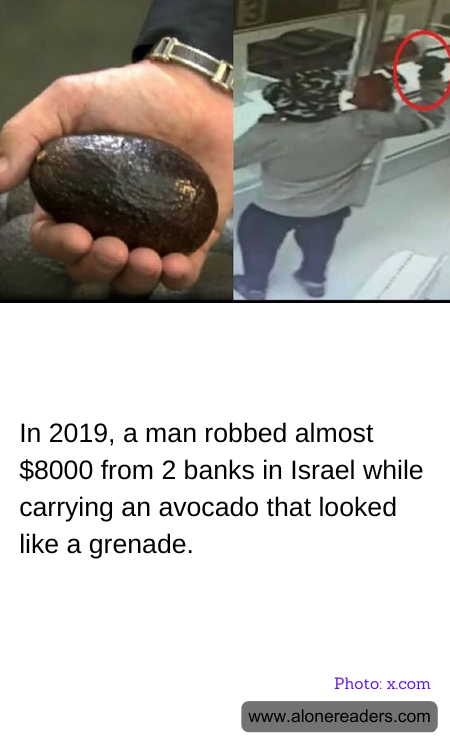
In a bizarre twist of criminal ingenuity, a man in Israel managed to rob nearly $8,000 from two different banks in 2019 using nothing more than an avocado painted black to resemble a grenade. The audacious heists unfolded in Be'er Sheva, a city in the southern part of the country, when the robber, a 47-year-old, exploited the fear instilled by the mere sight of what appeared to be a deadly weapon.
The first robbery occurred at a Postal Bank within a popular shopping center. Disguised with a hat and sunglasses to obscure his identity, the man handed the teller a note demanding money, threatening to lob the "grenade" if his demands weren't met. Understandably alarmed, the bank employee complied, handing over thousands of shekels. Just days later, the same man targeted another branch of the same bank, this time securing an even larger sum under the same terrifying pretense.
What makes this case particularly fascinating is not just the unconventional choice of a fake weapon but also the psychological impact it had. The use of an innocuous fruit, so everyday and benign, painted to mimic a grenade, underscores a profound aspect of human psychology—the influence of perceived threat. It also marks a peculiar chapter in the annals of crime, demonstrating that the power of suggestion can be just as effective as the display of a real weapon.
Authorities eventually caught up with the avocado-wielding robber, identifying him through security camera footage combined with cellular data and other technological tracing methods. Upon his arrest, it was revealed that the man was a former convict, with a prior record that included robbery. His inventive yet unlawful approach to bank robbery highlights an old lesson: desperation can fuel extraordinary creativity, though not always for lawful or ethical purposes.
This unusual incident offers more than just a tale of crime; it poses questions about security measures in public spaces, the psychology of crisis situations, and the lengths to which people will go to exploit human vulnerabilities. As for the banks and future security protocols, this event was a poignant reminder of the need for vigilance, even against threats that might initially appear implausible or even absurd.