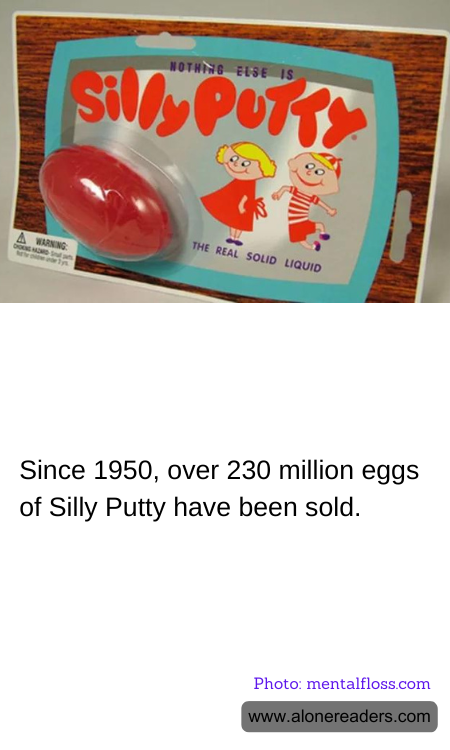
Silly Putty, a toy familiar to many generations, has seen an astounding level of popularity since its inception. With over 230 million eggs sold since 1950, this stretchy and bouncy material has been a staple in children's toy boxes around the world. Originally created by accident during World War II as scientists tried to develop a synthetic rubber substitute, Silly Putty turned out to be a unique polymer that didn’t have industrial applications but fascinated adults and children alike.
The original Silly Putty is basically a silicone polymer material that behaves both as a viscous liquid and a solid, depending on the force applied to it. It can be stretched slowly or bounce like a ball when rolled up and thrown against a surface. One of the most beloved features of Silly Putty is its ability to lift pencil, pen, and comics print, making it not only a toy but also a tool for playful art and copying newspaper comics.
This ability has given Silly Putty a dual appeal — both as a fun toy and as an educational or creative product. Teachers and therapists sometimes use it to develop muscle strength in the fingers and hands of children, or as a focus tool for individuals with ADHD. It’s known for being non-toxic, affordable, and durable, adding to its appeal for parents looking for safe and long-lasting options for their children.
The marketing and packaging of Silly Putty have also played a key role in its success. Packaged in bright, appealing plastic eggs, Silly Putty has always had a distinctive look that appeals to kids. These eggs are easy to store and help in maintaining the putty's texture and consistency, ensuring that it can be used and reused multiple times.
Despite the emergence of numerous new toys and technologies, Silly Putty has endured as a popular choice. This is partly nostalgic, drawing in adults who remember playing with it as children, and partly due to the simple, responsive pleasure that comes from manipulating the putty. It remains a versatile, engaging, and stimulating product, capable of stretching not just in form but also across generations.
