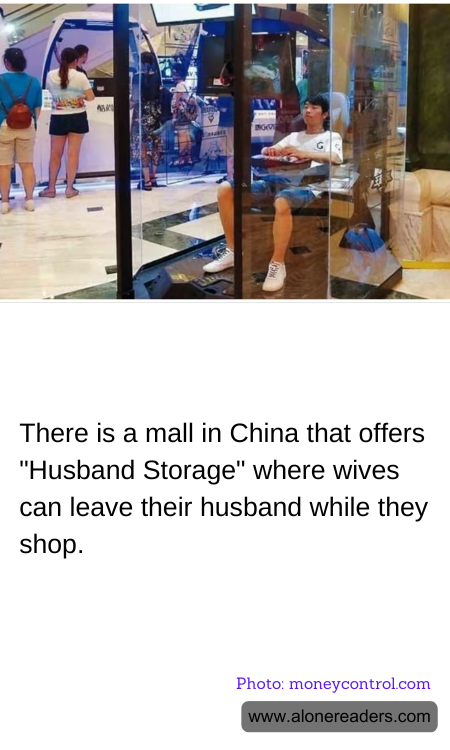
In the bustling heart of China's expansive urban life, a novel yet practical facility has emerged in shopping malls that caters to a unique aspect of the shopping experience: achieving harmony between couples with differing enthusiasm for shopping. Dubbed as "Husband Storage," this concept facilitates a place where wives can temporarily 'deposit' their husbands while they browse through stores at their own pace. This innovative service, significantly evident in Shanghai, is tailored to enhance the shopping experience for those whose partners may not share the same zeal for retail exploration.
The essence of "Husband Storage" lies in its approach to addressing a common social scenario—where one partner dislikes shopping or simply grows tired after hours of walking through bustling mall corridors. These spaces are typically equipped with comfortable seating areas, often replete with personal entertainment systems, magazines, books, televisions, and even video game consoles. This setup not only offers a respite for the less enthusiastic shopper but also turns their waiting time into a relaxing, or even enjoyable, hiatus.
The initiative reflects a broader understanding of human behavior and relationships. By providing a space where one can relax or engage in preferred leisure activities, malls are recognizing the diverse interests and patience levels of different shoppers. This tailored approach helps in elongating the shopping duration of the enthusiastic shopper without adversely affecting the mood and experience of their partner. Not only does it enhance the shopping experience for individuals, but it also tactically increases foot traffic and potential sales for the mall.
Moreover, "Husband Storage" sheds light on cultural discussions around traditional gender roles and modern relationship dynamics. This service may use nomenclature that seems to reinforce traditional roles—still, it inherently acknowledges the evolving dynamics where both partners may take turns in utilizing such a service. Potentially, there could be "Wife Storage" or more gender-neutral terms used to broaden appeal and applicability.
The idea, while amusing on the surface, is a significant nod towards consumer-centered business innovations that consider the subtler aspects of customer habits and dissatisfaction. Malls that have implemented this feature are reportedly seeing positive feedback, reinforcing the fact that small innovations, when strategically implemented, can significantly impact customer satisfaction and business success. As shopping malls globally face the challenge of competing with online retail, services like "Husband Storage" offer a compelling case of how brick-and-mortar establishments can innovate to enhance customer experiences in novel and meaningful ways.
