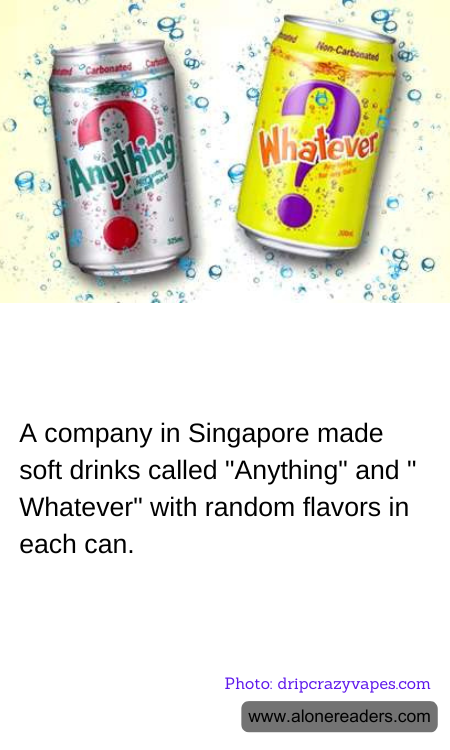
In a bold move that blurred the lines between mystery and refreshment, a Singaporean company introduced two uniquely branded soft drinks: "Anything" and "Whatever." These beverages took the concept of surprise to a new level by offering consumers a variety of flavors, with the twist that each can's contents were completely random. This innovative approach to soft drink production not only sparked curiosity among consumers but also created a buzz in the market.
"Anything" catered to those who preferred carbonated drinks, with potential flavors ranging from cola and lemon to fruity options like apple and root beer. On the other hand, "Whatever" was designed for non-carbonated drink enthusiasts, offering options such as iced tea, tropical fruit, or mojito. The allure of these products lay in their unpredictability—every sip was a gamble, and part of the fun was not knowing what you'd get until you took a drink.
The packaging of these drinks was intentionally ambiguous, with cans simply labeled "Anything" or "Whatever," leaving the contents a mystery until the moment of consumption. This unconventional strategy appealed particularly to younger demographics, who enjoyed the novelty and the thrill of the unexpected. In social settings, these drinks became a conversation starter, as people compared what flavors they had randomly received and swapped cans to find their preferred tastes.
The marketing behind "Anything" and "Whatever" cleverly played on modern decision fatigue, where consumers are often overwhelmed by too many choices. By removing the element of choice and injecting an element of surprise, the company turned the simple act of grabbing a drink into an exciting experience. This strategy also tapped into a broader cultural shift towards unique and experiential products, which attract consumers looking for something different from the mainstream offerings.
However, the success of such a daring concept also faced challenges, particularly concerning consumer satisfaction. While many embraced the novelty, others found the randomness off-putting, especially if they consistently received flavors they disliked. The lack of control over the product could deter some customers from repeat purchases, relying heavily on initial curiosity to drive sales rather than consistent preference.
Despite these challenges, "Anything" and "Whatever" became iconic examples of innovative marketing and product creation in the beverage industry. They underscore the power of novelty in consumer goods but also highlight the delicate balance companies must strike between innovation and consumer preferences. Whether such a concept could be sustained in the long term or was merely a successful short-term gimmick is a topic of debate, but the impact of these products on the market continues to be a fascinating study in consumer behavior and marketing strategy.
