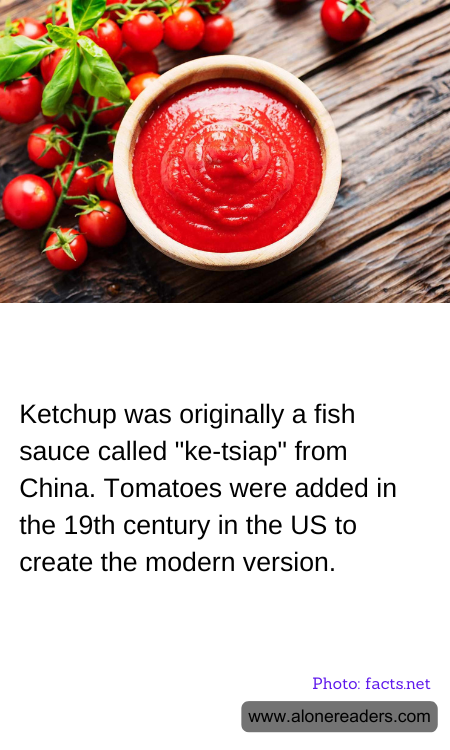
Ketchup, a condiment now synonymous with American fast food such as burgers and fries, has a rich and international history that dates back centuries. Originally, ketchup was not the tomato-based sauce we know today. Its predecessor was a fish sauce called "ke-tsiap" in 17th century China. This mixture was made from the brined ferment of fish and spices, offering a savory flavor that added depth to a variety of dishes.
As trade routes expanded and global exploration brought new cultural interactions, this sauce made its way to Malaysia and Indonesia where it was called "kecap" (pronounced "kay-chap"). This is where the term "ketchup" originated. British explorers in the 18th century encountered the sauce and brought it back to Britain, where it underwent various modifications. They experimented with recipes using ingredients like mushrooms, walnuts, and even anchovies in place of the original fish brine.
It was not until the 19th century in the United States that tomatoes were introduced to ketchup. With an abundance of tomatoes and sugar, Americans added these components to create a sweeter version of the earlier sauces. This innovation by American settlers transformed ketchup into a staple condiment in the U.S. and eventually around the world. The pivotal development came in 1876 when Henry J. Heinz launched his own recipe of tomato ketchup, which became hugely popular because of its sweetness and consistency. This marked the start of ketchup's mass production and commercial success.
Today, ketchup is primarily made with tomatoes, vinegar, sugar, and an assortment of seasonings and spices. It is one of the most popular condiments globally, found in almost every restaurant and household kitchen. From its origins as a fermented fish sauce to its development into a tomato-based staple, ketchup illustrates how a simple sauce can evolve significantly through cultural exchanges and innovations. Its history is not just about taste but also about the movement of ideas and ingredients across continents.
