More About This Card
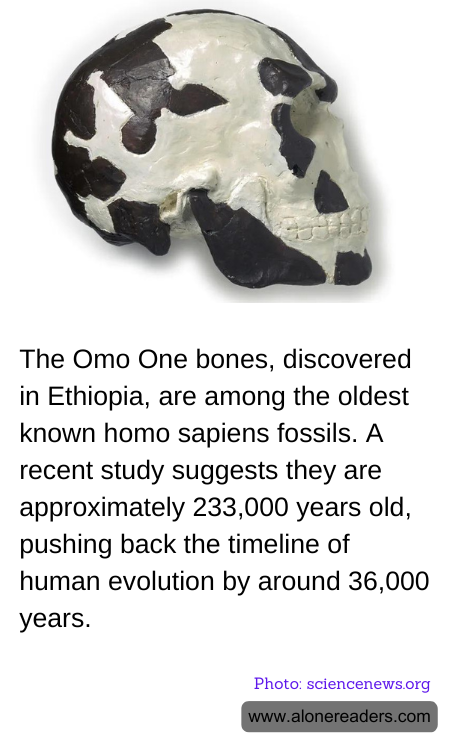
The discovery of the Omo One bones in Ethiopia has significantly reshaped our understanding of human history and the timeline of homo sapiens. Found in the Omo Kibish formation near the Omo River, these fossils represent some of the earliest anatomical evidence of modern humans. Recent advancements in dating technology have led to a groundbreaking reassessment of their age, now estimated at approximately 233,000 years old. This revises the previously accepted timeline of human evolution, extending the presence of modern humans by about 36,000 years earlier than formerly believed.
This revelation not only highlights the complexity and length of the human evolutionary timeline but also prompts a reevaluation of the migration, adaptation, and survival strategies employed by early homo sapiens. The environment they inhabited was markedly different from today’s world, presenting a host of challenges from climatic shifts to diverse megafauna, which they navigated with evolving tools and developing social structures.
Moreover, the older age estimate for the Omo One bones supports theories that suggest multiple, dispersed populations of early humans coexisted and interacted across Africa. This genetic and cultural exchange likely played a crucial role in the survival and evolution of our species. The findings underscore Africa’s central role in human evolution, emphasizing it not just as a singular "cradle of civilization" but as a complex mosaic of habitats that cradled diverse and dynamic groups of early humans.
The implications for our understanding of human genetics are profound. With an older timeline, scientists have a wider window to explore the genetic adaptations that helped early homo sapiens thrive. These insights could further inform our understanding of modern human health, offering evolutionary perspectives on diseases and physical diversity present within populations today.
In sum, the revised dating of the Omo One bones offers an exciting, expanded view of human history, challenging established narratives and opening new avenues for research in anthropology, archaeology, and genetics. As we continue to unearth and analyze the secrets held in these ancient remains, we undoubtedly will refine our perceptions of what it means to be human and how we came to be the complex, adaptable species that we are today.