More About This Card
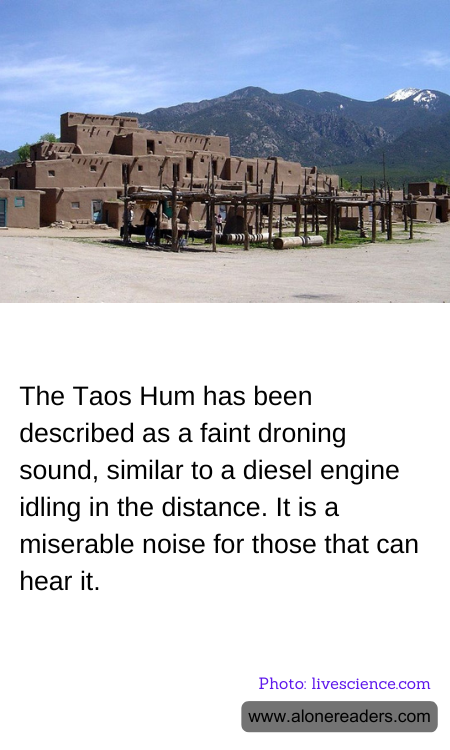
The Taos Hum, a mysterious auditory phenomenon, first gained widespread attention in the small town of Taos, New Mexico, in the early 1990s. It has been described by the townsfolk and visitors who can hear it as a low-frequency droning sound, much like a distant diesel engine idling. However, despite its well-documented presence through personal accounts, the precise origin and nature of the Taos Hum remain elusive, fueling both curiosity and frustration among researchers and locals alike.
The sound, reported by a modest percentage of the population — commonly known as "hearers" — has been the subject of various investigations aiming to determine its source. Scientists, researchers, and audiologists have speculated causes ranging from industrial equipment and electrical power lines to more unconventional theories involving psychological phenomena or covert military operations. Others suggest geological activity or the subtle vibrations of Earth itself could be resonating in peculiar ways under specific conditions.
Studying the Taos Hum has presented significant challenges. The primary difficulty in analyzing the hum lies in its low frequency and the fact that it does not occur consistently for all hearers, nor can it be recorded with standard audio equipment readily. This has led to a reliance on subjective descriptions provided by those affected, which vary widely in terms of pitch, volume, and even the emotional impact described by individuals. Some of those sensitive to the hum report significant distress, including headaches, insomnia, and a general decrease in quality of life, leading to a fervent desire for answers or a solution.
Attempts to alleviate the effects of the hum on the hearers have included community meetings with local government, soundproofing homes, and even personal relocation. Awareness and understanding of low-frequency noise pollution as a serious issue have increased generally as a result of the spotlight on phenomena like the Taos Hum. As of now, however, a definitive answer or a comprehensive explanation remains out of reach.
The Taos Hum is a compelling case within the broader category of unidentified auditory phenomena globally, which includes similar reports from places around the world such as the Bristol Hum in England and the Windsor Hum in Canada. These instances challenge our understanding of environmental sounds and human perception, highlighting the complexities of sound pollution and the intricacies of auditory health. As research continues into these pervasive and intrusive noises, it not only expands our scientific horizon but also represents a crucial step towards potentially offering relief to those affected by mysterious sounds like the Taos Hum.