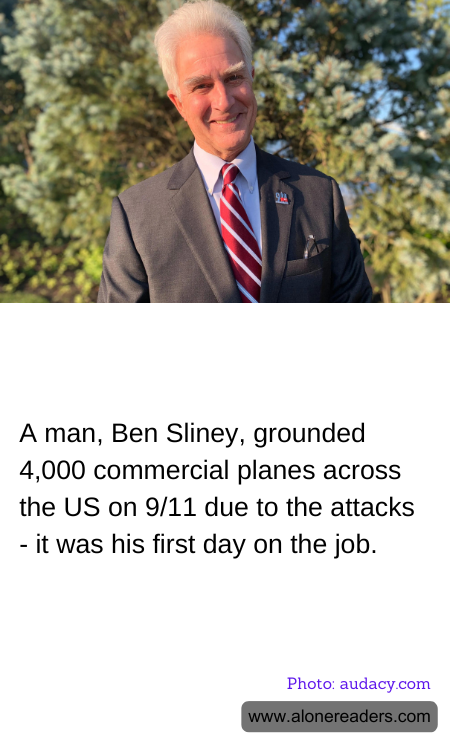
More About This Card
On September 11, 2001, a day that unfolded as one of the most devastating in American history, an unprecedented decision was made by a man who was just hours into his first day on a job. Ben Sliney, the newly appointed National Operations Manager at the Federal Aviation Administration’s (FAA) Command Center in Herndon, Virginia, made the critical call to ground over 4,000 commercial airplanes across the United States. This decision, monumental in both scope and consequence, was aimed at preventing further attacks following the tragic hijackings that led to the destruction at the World Trade Center, the Pentagon, and the crash in Pennsylvania.
Prior to this role, Sliney had accumulated extensive experience as an air traffic controller and an attorney, factors which seasoned him for high-stake decisions. However, nothing could have truly prepared him for the events of 9/11. After American Flight 11 crashed into the North Tower and United Flight 175 struck the South Tower, the reality of a coordinated attack became apparent. It was under these circumstances that Sliney, assessing the gravity of the situation, ordered all commercial aircraft to land at the nearest airport, effectively ceasing operations in the national airspace.
This order, unprecedented in U.S. aviation history, saw over 4,000 aircraft land without incident, in a span of just a few hours. This herculean task involved tremendous coordination with pilots, airline operations, and air traffic control personnel across the country. The grounding not only contributed to national security at a critical moment but also exemplified a remarkable display of crisis management and leadership under extraordinary pressure.
In retrospect, Ben Sliney’s decision to halt all flights was a pivotal moment that may have averted further chaos on a day marked by immense tragedy. His actions reflected a commitment to safety and a decisive response in a situation where hesitation could have had dire consequences. The effectiveness of this response is remembered as a testament to the strength and resolve of individuals and agencies to act swiftly in the face of unforeseen crises.