More About This Card
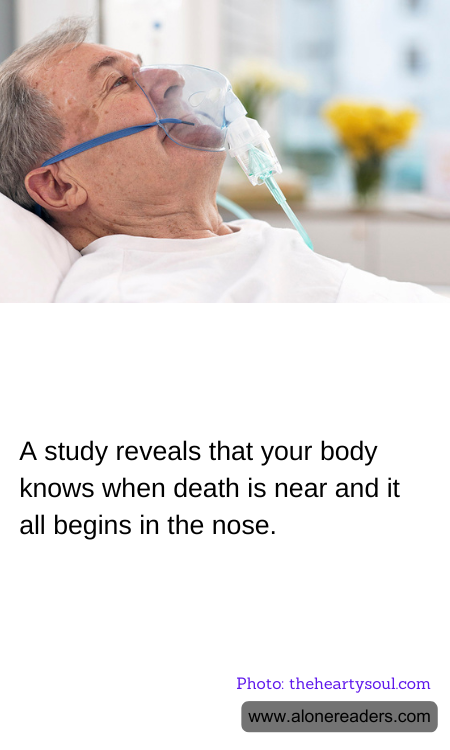
Death is an inevitable phenomenon, yet predicting its exact moment has eluded science and medicine for centuries. Intriguingly, recent research points towards the human body potentially having a biological indicator that signals when death is near, beginning in one of the most unexpected places: the nose. This groundbreaking study suggests that our sense of smell might dull significantly as we approach the end of life, serving as a subtle biological herald of death.
The research focuses on the olfactory system, the sensory mechanism responsible for our sense of smell. The nose contains olfactory receptors that engage with molecules released into the air, allowing us to detect and interpret various odors. The study explores how, as part of the natural aging process, these receptors, along with the overall olfactory function, degrade. This degradation has now been closely linked with the body’s preparation for eventual death, signaling a weakening in the body's operational systems.
Researchers have observed that a sharp decline in olfactory function often precedes death by a relatively short period. In practical terms, individuals who exhibit a significant loss of smell could potentially be in the latter stages of their life cycle, irrespective of the presence of any chronic illness. This association remains statistically significant even after adjusting for confounding factors such as age, gender, socioeconomic status, and overall health.
This revelation opens up new pathways for both the medical field and individuals in understanding and preparing for the end-of-life phase. For the medical community, it provides a new diagnostic tool that might help in better predicting life expectancy in terminally ill patients, possibly leading to enhanced palliative care practices. It shifts some focus towards sensory health as a broader indicator of vitality and life expectancy.
For individuals, understanding this correlation between the loss of smell and life expectancy could lead to earlier arrangements and considerations regarding end-of-life care, making the processes less abrupt and more manageable emotionally and practically for both the individuals and their families.
This discovery, while possibly unsettling, underscores the remarkable interconnectedness of the human body and emphasizes the importance of our senses not just for interaction with our environment, but also as indicators of our overall biological condition. It serves as a reminder of our body's complex and still not entirely understood mechanisms that subtly guide the phases of our life right up to its conclusion. As research continues to explore these fascinating aspects of human biology, we gain not only scientific knowledge but also deeper insights into the natural processes that frame our existence.