More About This Card
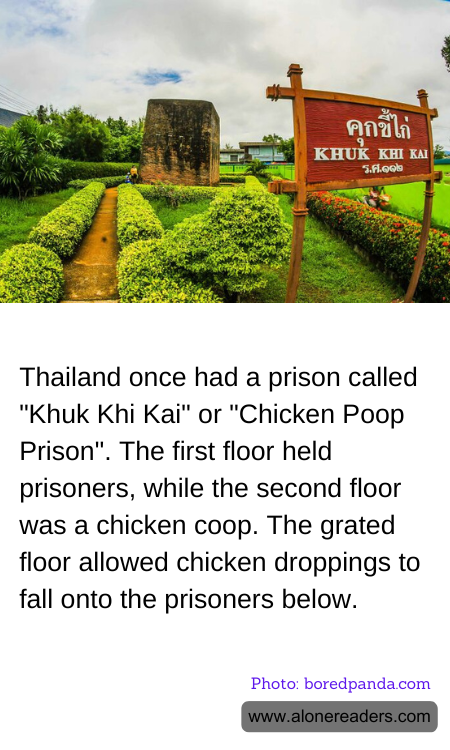
In the Southeast Asian country of Thailand, there existed a unique and daunting historical site known as "Khuk Khi Kai," which translates to "Chicken Poop Prison." This infamous colonial-era prison, located in Chanthaburi, serves as a grim reminder of the creative cruelty human beings are capable of under the guise of law and order. Khuk Khi Kai was constructed during the reign of King Rama V in the late 19th century, a time when Thailand was grappling with external pressures from colonial powers and internal strife.
The structure of Khuk Khi Kai was ingeniously designed to simultaneously house chickens and torture prisoners. This two-story edifice was made of red bricks with the upper floor designated as a chicken coop. The floor of this coop was fitted with iron grates rather than solid flooring. This deliberate architectural choice had a sinister purpose: it allowed for chicken droppings to fall through the grates directly onto the prisoners held on the first floor. The constant, putrid rain of dung not only degraded the prisoners physically, causing skin diseases and unbearable living conditions, but it also served as a psychological torture device, stripping inmates of their dignity and breaking their spirit.
The use of such a facility highlights a dark chapter in Thailand's penal history, reflecting a period of intense punitive measures that often crossed into cruel and unusual punishment. Khuk Khi Kai primarily held political prisoners and those who opposed the centralized powers during its operational years. Consequently, it also stands as a symbol of suppression and control, serving the dual function of containing perceived threats to the state and instilling a sense of fear among the populace.
Today, Khuk Khi Kai has been preserved as a historical landmark, drawing visitors who seek to understand more about Thailand’s complex past. The site serves educational purposes, illustrating the harsh realities of colonial resistance and the extent of human cruelty in conditions of desperation and conflict. For those who walk its halls, the remnants of the chicken coop and the stories of the suffering endured offer a poignant glimpse into a not-so-distant past. This unique and macabre piece of history not only informs contemporary views on justice and human rights but also reminds us of the resilience of the human spirit in the face of extreme adversity.