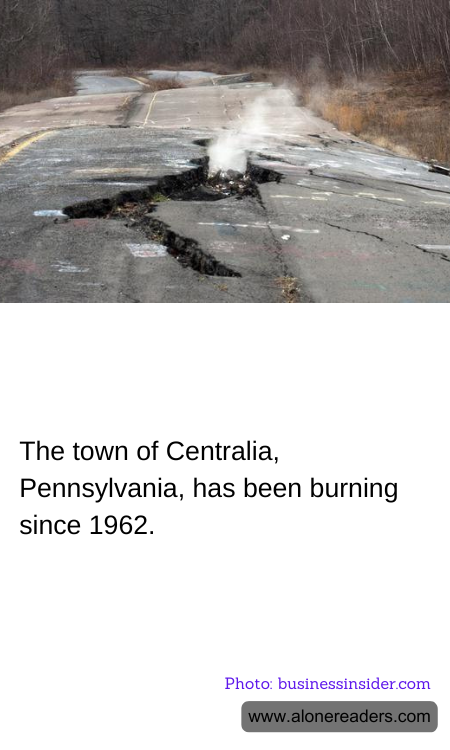
Centralia, Pennsylvania, serves as a haunting reminder of the long-term impacts of underground coal fires. Situated in Columbia County, this town became infamous due to a disastrous fire that ignited beneath it in 1962 and has been burning ever since. Initially a thriving community with a population that peaked at over 1,000 residents in the early 20th century, Centralia was part of the coal-rich region which powered much of America's industrial growth.
The fire reportedly started when local landfill, used as a site for burning trash, ignited a seam of coal underground. Attempts to extinguish the flames were unsuccessful, and the fire gradually spread through the network of mines beneath the town. Over the years, the relentless underground fire led to the opening of hazardous sinkholes while dangerous gases filled the air, leading to severe health and safety concerns.
By the 1980s, the reality of their situation dawned on Centralia's residents. The town became the focus of national attention when a 12-year-old boy nearly fell into a steamy, sulfurous sinkhole that suddenly opened beneath his feet in 1981. This event along with other similar incidents compelled the government to begin relocating the town's residents. By 1992, the Pennsylvania government invoked eminent domain affecting all properties in the town, prompting a formal evacuation. Most structures in Centralia were demolished, leaving behind a ghost town with only a few scattered homes and abandoned streets.
The underground fire in Centralia is expected to burn for another 250 years or more, as it continues to feed on the abundant coal deposits beneath the town. This makes Centralia a stark example of a modern environmental disaster and has been frequently compared or referred to in discussions about mining safety and environmental policy.
Today, Centralia intrigues curious visitors as a near-empty town with stretches of barren land and graffiti-covered, cracked roads leading nowhere. The remaining structures stand as eerie monuments to what was once a vibrant community. Despite its dangers, the town has become a point of fascination and an unusual destination for tourists drawn by its story. Yet, it also serves as a solemn testament to the destructive power of human error in managing natural resources.
