More About This Card
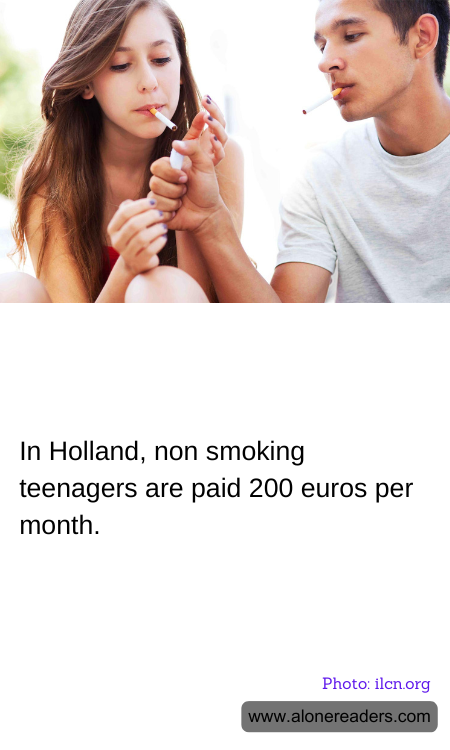
In an innovative move to combat smoking rates among the youth, Holland has taken a remarkable step in offering non-smoking teenagers a financial incentive. Each teenager who abstains from smoking is eligible to receive 200 euros per month, a policy aimed not only at promoting healthier lifestyles but also at reducing long-term health care costs related to smoking-related diseases.
The decision follows a series of studies indicating that financial incentives can significantly influence behavior, especially among the younger population who may not fully grasp the long-term health implications of smoking. This incentive-based approach also reflects a broader shift towards preventive health measures, recognizing the economic and social costs of smoking. By directly rewarding healthy behavior, the initiative seeks to establish a stronger early deterrent against the habit of smoking.
Moreover, the program includes educational components about the dangers of smoking and the benefits of staying smoke-free, ensuring that teens are not just motivated by monetary rewards but are also well-informed. This multi-faceted strategy enhances the program's effectiveness by addressing both the financial and educational aspects crucial for changing behavior.
The initiative has sparked a conversation across Europe about how governments can more actively involve themselves in preventive health care measures. Critics argue that while the incentive might be effective in the short term, it requires proper allocation and management of public funds to be sustainable. Conversely, proponents highlight the potential savings in healthcare and increased productivity as substantial justifications for the upfront investment.
As the program unfolds, its impact on teen smoking rates and overall public health is being closely monitored. Success could inspire other countries to adopt similar measures, potentially leading a significant shift in global public health strategies towards more proactive, preventive health care measures aimed at the youth.