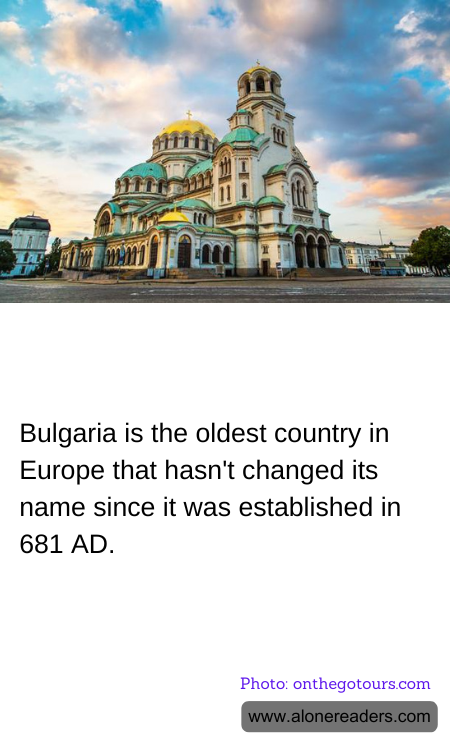
Bulgaria, nestled in the southeastern part of Europe, holds the unique distinction of being the oldest country on the continent that has preserved its original name since its founding. Established in 681 AD when the First Bulgarian Empire was founded by Khan Asparuh, Bulgaria has maintained its identity despite the dramatic and often turbulent history that swept across Europe over the centuries. This remarkable continuity makes Bulgaria not only a repository of ancient European history but also a living testament to cultural and national endurance.
Throughout the ages, Bulgaria found itself at the crossroads of multiple civilizations, contributing richly to the tapestry of European culture. From the Thracians, who left behind exquisite tombs and gold treasures, to the Romans with their architectural monuments, and later the Byzantines and Ottomans, each era has left indelible marks on the Bulgarian lands. These influences are evident in Bulgaria's art, architecture, religion, and customs, forming a unique cultural landscape that attracts scholars and tourists alike.
Bulgaria’s ability to retain its name and sovereignty is impressive, especially considering the region's history of frequent invasions and domination by powerful empires. After nearly five centuries of Ottoman rule, Bulgaria regained its independence in the late 19th century, reestablishing itself as a political and cultural entity in Europe. Despite the social upheavals, including the transitions from monarchy to communism and then to a democratic government, Bulgaria’s name remained unchanged, underscoring a persistent and resilient national identity.
Today, Bulgaria is renowned not only for its historical significance but also for its vibrant traditions, folklore, and natural beauty. The country's landscape offers a diverse range of attractions, from the sandy beaches of the Black Sea coast to the alpine peaks of the Balkan Mountains. This geographical diversity, coupled with historical landmarks such as the Rila Monastery and the ancient city of Plovdiv, provides profound insights into the human journey through time in this part of the world.
The story of Bulgaria is particularly compelling for those interested in the evolution of cultures and nations. The continuous use of the name "Bulgaria" since 681 AD is a narrative of survival, adaptability, and pride. It reflects the undying spirit of the Bulgarian people and serves as a source of national pride and historical continuity in a region defined by change.
