More About This Card
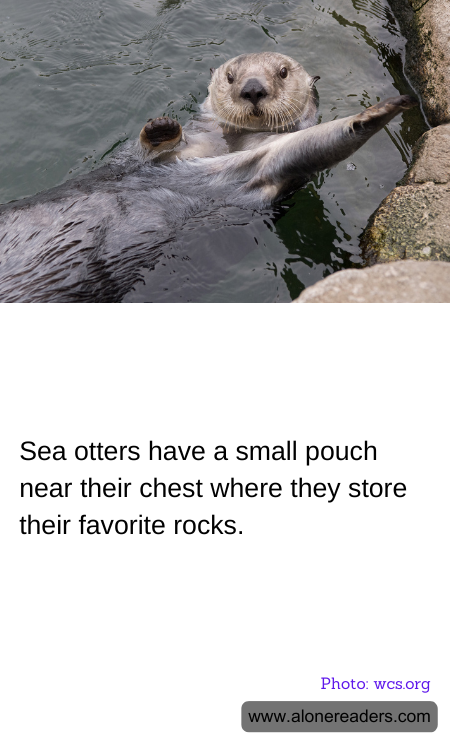
Sea otters, charming and playful denizens of the coastal marine environments, exhibit a remarkable behavior that is as endearing as it is practical. These marine mammals have a fascinating adaptation involving the use of tools, a trait that places them in a select group of intelligent animals capable of such skills. Among the most intriguing of these behaviors is their use of a built-in storage pouch located near their chest to stash away their favorite rocks.
This small pouch, which is essentially a loose flap of skin under each foreleg, serves as a multi-purpose tool kit. Sea otters use their favored rocks for various tasks, primarily for foraging. They are particularly known for their unique method of eating hard-shelled prey such as sea urchins, abalones, and clams. The otters smash these shells against their stored rocks, placed on their chests, to access the soft flesh inside. This not only showcases their problem-solving abilities but also their skill in using tools, a characteristic that is quite rare among non-human animals.
Moreover, the rocks kept in these pouches are not chosen at random. Sea otters often have favorite rocks that they use repeatedly and seem to select with great care. These preferred rocks are typically smooth and of a size that fits comfortably in their pouch and hands. The otters' attachment to specific rocks is so strong that they may use them for years, indicating a level of personal preference and perhaps even emotional attachment.
This behavior underscores not only the cognitive capabilities of sea otters but also their adaptability to their environment. Living in the challenging and dynamic interface between the land and the sea, these animals have developed a set of highly specialized skills and behaviors that help them survive and thrive. The use of tools is just one of the many ways in which sea otters interact with their ecosystem; they also play a crucial role in maintaining the health of coastal environments. By preying on sea urchins, they help regulate sea urchin populations, which in turn helps prevent overgrazing of kelp forests, crucial underwater habitats that provide shelter and food for a diverse range of marine species.
In essence, the sea otter’s use of rocks and their unique method of storing them not only highlights their intelligence but also serves as a reminder of the complex interactions within ecosystems and the ingenuity of nature in evolving such behaviors. These insights contribute to our understanding of animal behavior and help inform conservation efforts, ensuring these delightful creatures continue to enchant and benefit marine ecosystems for generations to come.