More About This Card
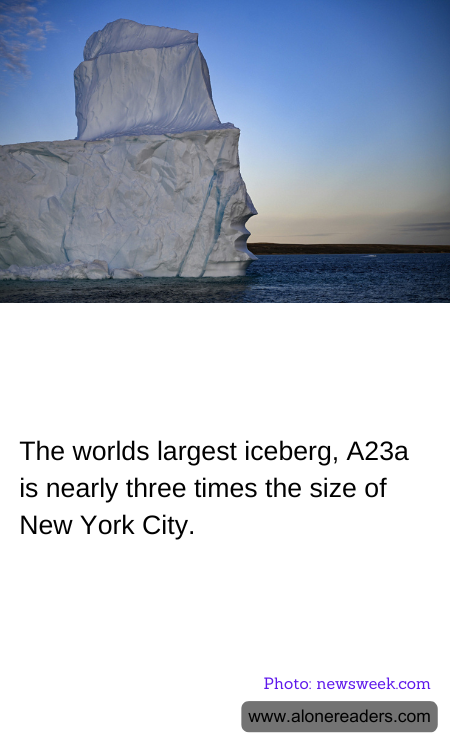
Spanning a colossal area of about 4,200 square kilometers, A23A, the world's largest iceberg, is a floating marvel almost thrice the size of New York City. This massive body of ice originated from the Filchner-Ronne Ice Shelf in Antarctica and has been drifting through the Weddell Sea since it broke away in the early 1980s. The sheer size of this iceberg draws significant scientific interest and underscores the dynamic nature of Antarctic ice processes.
Understanding the behavior and trajectory of A23A provides critical insights into global ocean currents and climate systems. As it drifts, the iceberg impacts the ecosystems through which it moves. This involves the alteration of aquatic life habitats due to changes in freshwater distribution and the underwater shadows cast by such a massive body, which can alter phytoplankton activity—foundational elements of the ocean food chain. Furthermore, as icebergs like A23A melt, they contribute to freshwater influxes into saltwater environments, potentially affecting oceanic salinity and circulation patterns that are crucial to global climate regulation.
Moreover, A23A represents a profound example of the scale and consequence of ice calving events, processes where chunks of ice break off from ice shelves or glaciers, typically influenced by factors like temperature fluctuations and ocean currents. These events are critical indicators in the context of climate change, as they reflect responses of ice bodies to environmental conditions. The monitoring of A23A and other large icebergs is essential for enhancing predictive models related to sea-level rise and climate dynamics.
Iceberg A23A also poses navigational risks for ships, particularly in increasingly accessible polar regions. Tracking its position and movement helps mitigate potential maritime hazards, exemplifying the broader implications of iceberg monitoring for safety in addition to scientific research.
As it continues its slow journey through the Southern Ocean, researchers keep a vigilant eye on A23A, collecting data that is crucial not only for understanding current environmental shifts but preparing for future scenarios in an era of global change. These observations serve as a stark reminder of the ongoing transformations within our planet’s cryosphere and the interconnected impacts across global ecosystems and human activities.